Remember reading?

An interesting piece from Slate referencing research on the difference between reading online and reading print versions of newspapers.  According to Jack Shafer:

“The researchers found that the print folks “remember significantly more news stories than online news readers”; that print readers “remembered significantly more topics than online newsreaders”; and that print readers remembered “more main points of news stories.” When it came to recalling headlines, print and online readers finished in a draw.”

I’m sure the arguments will be trotted out that people read differently now, not better or worse. But shouldn’t that difference include getting the main point and remembering what you read after you read it?

Scott Cairns: Recovered Body

Recovered BodyMy rating: 4 of 5 stars

I admired these poems more than I loved them. Though that may say more about me than about the poems. Believing with the Konstanz school that the work of art is an event occurring only when an object is encountered, reviewers should probably preface what they have to say with self-critique, admitting that, after all, every act of criticism is disguised autobiography, or at least disguised desire. (How else to account for the different ways a person takes a book in the course of a life—thrilled in youth and bemused or embarrassed in middle age that we took the time once to be enthused.) In that spirit I should say that I was tired when I read these poems, and more tired when I read through a second time. It also likely didn’t help matters that I had read through Marie Howe’s “What the Living Do” earlier this week, a collection that left me feeling shaken and undone, as if in counting her losses she had fingered the raw places left by mine. Finally, it may be that in the recesses of my brain I’m carrying the memory of Cairns visit to Messiah College several years ago, delivering a reading that I felt was both profound and down to earth, deeply serious while also good-humoured.

By comparison, these poems seemed to me this time around more accomplished than moving, as if written while attending more to other poems than to readers. This is not to say that there’s not a lot to admire or that there is not a great deal of accomplishment. Indeed, it a poet’s great advantage that if even half a dozen poems that strike the anvil, an entire collection will have been worth the reading. By comparison, fifty good pages in a novel otherwise full of dreck leave me infuriated that the promise in those pages had been such a tease. Cairns is at his best in taking the old, old stories and finding the new thing. His curiosity presses the “Why?” and “What if?” Why, after all, did Lot’s wife look back. Could it have been something like compassion? And, if we were truthful with ourselves, won’t we admit that we are, in the lurid eye of our imaginations, looking back too at smoldering Sodom? What if Jacob slew Isaac after all, the story of rams and angel a good tale to give God a little cover. Perhaps the most moving of these to me was his rendering of Joseph, long after the successes of his life and the moral triumphs of his forgiving spirit, never quite forgetting the terror of that adolescent grave he’d been assigned by his brothers:

“And in succeeding years, through their provocative turns of fortune—false accusations, a little stretch in prison, a developing facility with dreams—Joseph came gradually into his own, famously forgave his own, pretty much had the last laugh, save when, always as late in the day as he could manage, he gave in to sleep and to the return of that blue expanse, before which all accretion—accomplishment, embellishment, all likely interpretations—would drop away as he found himself again in the hollow of that well, naked, stunned, his every power spinning as he lay, and looked, and swam.”

This is old hat defamiliarization. But it is also really good stuff. How absolutely true it must be, or at least could have been, about Joseph. We want triumph without memory, and redemption without regrets. This and other poems like it tear Biblical and historical figures out of the thick mask of their necessary reputations, places where, as Cairns puts it in another poem, they are “all but veiled by chiaroscuro and the prominence.”

All of this is praise, and it may say something that I find myself admiring, and even liking, these poems the more I write about them in this review, writing, after all, an act of thought, an exercise of the imagination on the idea of poetry and literature and these poems and this literature. But in the reading I found all this just a little distancing, as if the manner of these poems was too far from my need. While the technology of the poetry was to make remote figures human for me again, to, as the title of the collection suggestion suggests, give testimony to the “recovered body,” the poems’ achievements seemed primarily intellectual or literary or interpretive, rather than visceral. Someone said they wanted poetry that made them feel as if the top of their heads had been taken off, and I tend to agree. But again, perhaps that only speaks to my own needs, my own place, my own embodiment, the facts of my father’s gradual descent in to dementia and my mother’s grappling with depression, that I miss and worry anxiously about my daughter away at school, or fret and feel tired already at the sense that the past summer never actually began and now it is all but ended. So perhaps it is not surprising that the poem I liked the most in the collection was also clearly the most lyric and personal. The one in which Cairns, remembering the death of his father, struck me as a person more than an imagination:

As we met around him
That last morning—none of us unaware
of what the morning would bring—I was struck
by how quickly he left us. And the room
emptied—comes to me now—far too quickly.
If impiety toward the dead were still
deemed sin, it was that morning our common
trespass, to have imagined too readily
his absence, to have all but denied him
as he lay, simply, present before us.

This poem–unlike the others, all occupying their own form of goodness–made me say Yes.

View all my reviews

Marie Howe: What the Living Do

Marie Howe

“What the Living Do” manages to give me an unsentimental but still deeply felt picture of the pain of living beyond loss.  The immediate occasion for these poems is the death of several friends and family members over what seems, in the context of this books at least, a relatively short period of time.  The real focus, however, is not so much on the dying–the psychic and physical pain of disease, the fear of a passage elsewhere–as it is on the poet herself, or at least her personae. These are not elegies then; or at least not elegies to the dead so much as elegies to who we imagine we must have been before the clefts and rifts that the loss of those we love opens in our lives, or perhaps elegies to the selves we imagine we might

What the Living Do

have become.  Finally, though, these are poems of hope.  I would not call them poems of overcoming.  Grief remains, and in some sense we become, as we age, people who remember the dead, in our voices and in our silences.  But poems of hope in that they recognize that we do go on.  This is what the living do:  they go on, carrying with them acts of remembrance such as these.

Joyce Carol Oates’s Man Crazy

Man CrazyMan Crazy by Joyce Carol Oates
My rating: 3 of 5 stars

Oates is often an artist of extremes. When it works it really, really works. When it doesn’t it can feel like there’s something manipulative going on, and something that feels too close to exploitation in her obsession with human degradation. I wavered throughout this book. The Satanic motorcycle gang feels cheap and obvious, and the resolution was too quick to be genuine. On the other hand, I found the writing compelling, and i care in the end about the lives of Ingrid and her mother, made crazy by the world of violent or inadequate men that they love or think they love.

View all my reviews

2010 in review

The stats helper monkeys at WordPress.com mulled over how this blog did in 2010, and here’s a high level summary of its overall blog health:

Healthy blog!

The Blog-Health-o-Meter™ reads This blog is on fire!.

Crunchy numbers

Featured image

The average container ship can carry about 4,500 containers. This blog was viewed about 20,000 times in 2010. If each view were a shipping container, your blog would have filled about 4 fully loaded ships.


In 2010, there were 8 new posts, growing the total archive of this blog to 140 posts. There were 5 pictures uploaded, taking up a total of 197kb.

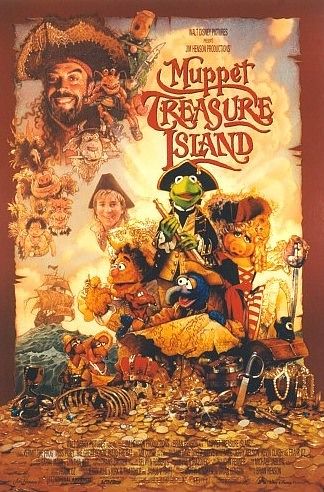
The busiest day of the year was November 13th with 215 views. The most popular post that day was Treasure Island on Book Glutton: an invitation.

Where did they come from?

The top referring sites in 2010 were search.aol.com, mycrazyreader.info, en.wordpress.com, mariaozawa2u.blogspot.com, and search.conduit.com.

Some visitors came searching, mostly for toilet, obama, the happening, treasure island, and japan.

Attractions in 2010

These are the posts and pages that got the most views in 2010.

1

Treasure Island on Book Glutton: an invitation March 2008
2 comments

2

Tales of the Toilet; or, W(h)ither Fiction? May 2008
6 comments

3

Summer’s Guilty Pleasures: A Movie Miscellany July 2008

4

Naked Book Reading: An Idea Whose Time Has Come April 2008
6 comments

5

Reading, listening and memory February 2008
5 comments

Quotes of the Day–Gary Shteyngart–7/18/10

Shteyngart, who could pass for my friend Tim Dawson

“I don’t know how to read anymore. I can only read 20 or 30 words at a time before taking out my iPhone and caressing it and snuggling with it.”

“American fiction is good. It would be nice if somebody read it.”

From Shteyngart’s recent interview with The New York Times Magazine.  Shteyngart’s new novel is on the way.  I’ve only read Absurdistan, but am looking forward to what’s next.

War and Community–Sebastian Junger’s “War”

Just got done reading Sebastian Junger’s new book, War.  The title is a little

Sebastian Junger--"War"

grandiose since I don’t think Junger delivers the truth of War, but I do think it is a very good book and certainly the best thing, in a relatively limited sample, that I’ve read about the American experience in Afghanistan.

Junger avoids political pronouncements in preference for a close examination of the individual experience of the soldier at war, and even more particularly on the soldier in the combat zone.   Indeed, I think to some degree that the book might more appropriately have been titled “Combat,” since it is really focused not on the large scale strategy, tactics or mechanics of carrying out a war, but on the men at the point of the spear who live under fire or the threat of it.

I’m interested in a lot of things about this book, but most particularly on Junger’s concentration on the supremacy of the combat unit, the squad or platoon through whom the basic bloody work of military strategy is made real.  Junger emphasizes the fact that survival and success in combat depends on every individual soldier deciding repeatedly, if unconsciously, that the lives of other members of the team are more important than his own.  Indeed, in what was to my mind Junger’s most startling claim,  courage in battle must be understood first and foremost as a form of love:

Combat fog obscures your fate–obscures when and where you might die–and from the unknown is born a desperate bond between the men.  That bond is the core experience of combat and the only thing you can absolutely count on.  the army might screw you and your girlfriend might dump you and the enemy might kill you, but the shared commitment to safeguard one another’s lives is unnegotiable and only deepens with time.  The willingness to die for another person is a form of love that even religions fail to inspire, and the experience of it changes a person profoundly.  What the Army sociologists, with their clipboards and their questions and their endless metanalyses, slowly came to understand was that courage was love.  In war, neither could exist without the other, and that in a sense they were just different ways of saying the same thing.  According to their questionnaries, the primary motivation in combat (other than “ending the task”–which meant they all could go home was “solidarity with the group.”  that far outweighed self-preservation or idealism as a motivator” (239-230).

Junger connects this even to the solidarity of the group in the pursuit of killing.  Killing in war is not primarily about the hatred or dehumanization of the enemy, idealism about causes, patriotism for country.  It is more primordially about saving the lives of those you love.

Junger’s depictions and ruminations here are convincing to me, quite apart from my own convictions about personal or state violence, and they do give me pause over a particular conundrum.  American life is so thoroughly characterized by individualism and self-promotion.   And yet life in combat–which is in some ways also seen as quintessentially American–is by Junger’s accounting absolutely about self-effacement in some profound and existential way.  I was reminded of the controversy over The Hurt Locker

The Hurt Locker Poster

where veterans of bomb squads were deeply troubled by the individualistic and cowboy renegade image that was projected by the protagonist.  Reading Junger, I understand that complaint more clearly now.  The individualistic hero who strikes out on his or her own at apparently great risk to himself and others is a Hollywood figure, but one who, if univeralized, would very quickly mean the absolute destruction of a fighting the unit, the opposite of the kind of sacrificial heroism that Junger believes is a characteristic not of exceptional persons in combat, but the fundamental nature of what makes combat possible at all.