Tag Archives: e-books

Tchotchkes R’US: Formerly known as Barnes and Nobles, Booksellers

Like a beaten dog wagging its tail as it returns to the master for one more slap, I keep returning to Barnes and Nobles, hoping for a dry bone or at least a condescending pat on the head. Mostly getting the slap.  I’m wondering lately how much longer B&N can hold on to the subtitle of their name with a straight face. I admit that for purists Barnes and Nobles was never much of a bookseller in the first place, the corporate ambiance just a bit too antiseptic for the crowd that prefers their books straight, preferably with the slightest scent of dust and mold. But as a person that has spent the entirety of his life in flyover country, Barnes and Nobles and its recently deceased cousin Borders seemed something like salvation. If the ambiance was corporate, the books were real, and they were many. If there were too few from independent publishers, there were more than enough good books to last any reader a lifetime, and I spent many hours on my own wandering the shelves, feeling that ache that all readers know, the realization that there are too many good books and one lifetime will never be enough.

Barnes and Nobles became a family affair for us. One way I induced the habit of reading in my kids was to promise them I’d take them to B&N anytime they finished a book and buy them another one. The ploy paid off. My kids read voraciously, son and daughter alike, putting the lie to the notion that kids today have to choose between reading and surfing.  My kids do both just fine, and I think this is attributable in no small part to the fact our family time together was spent wandering the endless aisles of bookstores, imaging the endless possibilities, what the world would be like if we only had enough time to read them all. Other families go on kayak trips; we read books. I’m not sorry for the tradeoffs.

All that is mostly over, for paper books anyway. My son and I still go over to Barnes and Nobles, but the last three trips we’ve come out saying the same thing to one another without prompting–worthless. Aisle after Aisle of bookshelves in our local store are being replaced by toys and tchotchkes designed to…..do what? It’s not even clear. At least when the place was dominated by books it was clear that this was where you went for books. Now it seems like a vaguely upscale Walmart with a vast toy section. I’m waiting for the clothing section to open up soon.

I don’t think we should underestimate the consequence of these changes for booksellers and bookreaders. Although it is the case that readers will still be able to get books via your local Amazon.com, the place of books is changing in radical ways.  The advent of e-books is completely reordering the business of bookselling–and i would say the culture of books as well.  An article in the Economist notes that books are following in the sucking vortex that has swallowed the music and newspaper industries all but whole.  Among the biggest casualties is the books and mortar bookstore, and this is of no small consequence to the effort to sell books in general:

Perhaps the biggest problem, though, is the gradual disappearance of the shop window. Brian Murray, chief executive of HarperCollins, points out that a film may be released with more than $100m of marketing behind it. Music singles often receive radio promotion. Publishers, on the other hand, rely heavily on bookstores to bring new releases to customers’ attention and to steer them to books that they might not have considered buying. As stores close, the industry loses much more than a retail outlet. Publishers are increasingly trying to push books through online social networks. But Mr Murray says he hasn’t seen anything that replicates the experience of browsing a bookstore.

Confession, I actually enjoy browsing Amazon, and I read book reviews endlessly.  But I think this article is right that there is nothing quite like the experience of browsing the shelves at a bookstore, in part because it is a kind of communal event.  It is not that there are more choices–there aren’t, there are far more choices online.  Nor is it necessarily that things are better organized.  I think I have a better chance of finding things relevant to my interests through a search engine than I do by a chance encounter in the stack.   And, indeed, The Strand is a book store that leaves me vaguely nauseous and dizzy, both because there is too much choice and there is too little organization.  But the physical fact of browsing with one’s companions through the stacks, the chance encounter with a book you had heard about but never seen, the excitement of discovery, the anxious calculations–at least if you are an impoverished graduate student or new parent–as to whether you have enough cash on hand to make the purchase now or take a chance that the book will disappear if you wait.  All of these get left behind in the sterility of the online exchange.  The bookstore is finally a cultural location, a location of culture, where bookminded people go for buzz they get from being around other book-minded people.  I can get my books from Amazon, and I actually don’t mind getting them via e-books, avoiding all the fuss of going down and having a face to face transaction with a seller.  But that face to face is part of the point, it seems to me.  Even though book-buying has always fundamentally been about an exchange of cash for commodity, the failure to see that it was also more than that is the cultural poverty of a world that amazon creates.  With books stores dying a rapid death and libraries close upon their heels, I’m feeling a little like a man without a country, since the country of books is the one to which I’ve always been most loyal.

I am, of course, sounding old and crotchety.  The same article in the Economist notes that IKEA is now changing their bookshelf line in the anticipation that people will no longer use them for books.

TO SEE how profoundly the book business is changing, watch the shelves. Next month IKEA will introduce a new, deeper version of its ubiquitous “BILLY” bookcase. The flat-pack furniture giant is already promoting glass doors for its bookshelves. The firm reckons customers will increasingly use them for ornaments, tchotchkes and the odd coffee-table tome—anything, that is, except books that are actually read.

I suspect this may be true.  Bookshelves and books alike may become craft items, things produced by those curious folks who do things by hand, items that you can only buy at craft fairs and auctions, something you can’t find at Wal-Mart, or Barnes and Nobles.

Conrad’s Typhoon: or, An Ode to My iPad

Joseph Conrad

Typhoon by Conrad, Joseph

My rating: 4 of 5 stars

Conrad’s Typhoon: or, An Ode to My iPad

I think one reason I don’t write and publish more than I do is because I am far too slow on the trigger. The ubiquity of blogging hasn’t helped this any since I usually find that someone else much more intelligent and articulate than I has blogged on what I think of as MY SUBJECT in a manner far more perspicacious, acute and interesting than I could manage. Take Charles Simic’s meditation on boredom during the recent power outages along the east coast, blogged over at the NYRB. I had several of those, Yes-that-is-exactly-what-was-on-the-tip-of-my-tongue moments reading lines like these:

“We sit with our heads bowed as if trying to summon spirits, while in truth struggling to see what’s on our dinner plates. Being temporarily unable to use the technology we’ve grown dependent on to inform ourselves about the rest of the world, communicate with others, and pass the time, is a reminder of our alarming dependence on them.”

Of course, these words weren’t actually on the tip of my tongue, but by imagining that the poet is only telling us what we have always known but could not say so well, we are able to give ourselves credit for a lot of intelligence and imagination that we don’t actually possess. Simic goes on to talk about the notable demise of reading and other delights like radio in the fact of our ubiquitous gadgets. Now, of course, reading books on a rainy afternoon or listening to a radio show has the faint reek of quaintness when we can’t manage to champion with a straight face these distractions as relics of authenticity. Simic reminds us that reading too was a form of distraction as surely as an i-phone.

“All of this reminded me of the days of my youth when my family, like so many others, lived in a monastic solitude when the weather was bad, since we had no television. It wasn’t in church, but on dark autumn days and winter nights that I had an inkling of what they meant when they spoke about eternity. Everyone read in order to escape boredom. I had friends so addicted to books, their parents were convinced they were going crazy with so many strange stories and ideas running like fever through their brains, not to mention becoming hard of hearing, after failing to perform the simplest household chores like letting the cat out.

“Living in a quiet neighborhood made it even worse. Old people stared out of windows at all hours, when they were not staring at the walls. There were radios, but their delights—with the exception of a few programs—were reserved for the grownups only. Thousands died of ennui in such homes. Others joined the navy, got married, or moved to California. Even so, looking back now, I realize how much I owe to my boredom. Drowning in it, I came face to face with myself as if in a mirror.”

Be that as it may, I lived out this boredom during the last hurricane by taking up Conrad’s Typhoon, the Project Gutenberg version, on the recommendation I received via my facebook friending of the New Yorker Magazine. (Let’s be frank, folks.  Oprah’s book club is absolutely yesterday).  Too dark to read, yes, but unlike the youthful Simic I had one gadget in hand that bore its own light to me in hand, my trusty iPad, fully charged and functioning.

When I began blogging three years ago at Read, Write, Now (a title I have come to detest, so future bloggers choose carefully), I had a suspicious and doubtful mindset about e-books, e-readers, and many things e-in-general. To be sure, I saw the advantages of blogging as a means of immediate intellectual self-gratification, and even then I think I felt that a great deal of writing and reading, especially in the academic world, would migrate effectively online. But I could not imagine, then, that an electronic gadget could take the place of paper. I wrote about the fact that I freely took my paper books in to saunas and bathtubs, that I could find my way through paper books more quickly and simply than with a scrolling sidebar, that I didn’t have to worry about whether it was sunny outside. And the smell, the smell, the smell. E-books were sterile, it seemed to me. In a word inauthentic.

I may still believe some of this, but I believe it less than I used to, largely due to my i-Pad. To come back to the

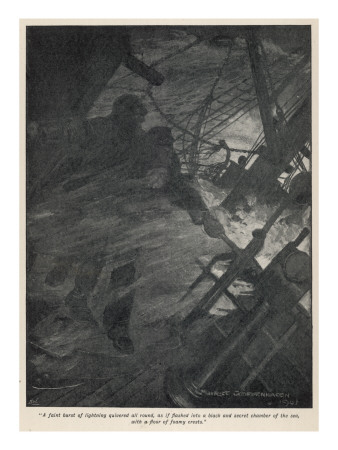
The steamer Nan Shan in the Storm

ostensible purpose of this review, Conrad’s Typhoon, it was the first full book I had read on my IPad, if a novella of 100 some odd pages can be thought of as a full book. And the verdict is that it was like reading…well…a book. The interface felt book like, I can adjust the light to the needs of my aging eyes, and can read more clearly than I could have managed by candlelight. I’ve always worried about the ability to personalize the texts, but iBooks lets me underline, and if anything I personalized the text more than I might have some others since my handwriting is unreadable and my notes in paperbooks cryptic and unintelligible. By contrast, the marginalia tool in iBooks is clean and my notes copious. Perhaps above all, I loved my iPad for remaining charged and working when everything else failed, leaving in the dark and to my own devices. Scary what I might find in that mirror. I read the entire book undistracted by facebook or my email apps, but I took comfort in knowing they were available for my distraction should I need them.

Now as to Typhoon itself. I want to say “Yes,” with qualifications. The story is gripping and intense, a naturalist drama of man against nature that becomes a kind of paean to stoic and pedestrian endurance, though one that is ironic and complicated in the end. The main human character is Captain MacWhirr, whose name betokens a machine-like efficiency. He is a man of small intellect, little imagination, and no intellectual curiosity. Because of this it is hard to describe him as actually courageous in the teeth of the hurricane. While a more imaginative man might have hidden his response to the terrors of the outrageous sea in cryptic understatement, MacWhirr is mostly just given to small emotion and small imagination.

Captain MacWhirr was trying to do up the top button of his oilskin coat with unwonted haste. The hurricane, with its power to madden the seas, to sink ships, to uproot trees, to overturn strong walls and dash the very birds of the air to the ground, had found this taciturn man in its path, and, doing its utmost, had managed to wring out a few words. Before the renewed wrath of winds swooped on his ship, Captain MacWhirr was moved to declare, in a tone of vexation, as it were: “I wouldn’t like to lose her.”

One doesn’t come away from this novel feeling grand and heroic and triumphant about human beings. On the other hand, one doesn’t come away feeling like human beings are small and accidental as you do, for instance in reading Stephen Crane’s “The Open Boat”. Instead endurance seems something to be achieved, and we end up happy for MacWhirr that he has achieved it, knowing we’d rather have him dull and unimaginative, but steady, were we caught in the writhing seas ourselves.

The story as a whole is gripping and seems to reveal something about both our human frailty and our strength and complexity, making it more than just a good adventure story. If I had read it first, I’m sure I would say that The Perfect Storm reminded me of it in being only partly a book about humans against the storm, and as much or more about humans against themselves.

One thing keeps me from a whole hearted endorsement. It really is the case that the depictions of Chinese in the book are deeply troubling. Passages in which Chinese are cast a jabbering animals or as writhing forces of nature are offensive and hard to find a way to redeem. I have always thought the criticism of Heart of Darkness was perhaps unearned since the thesis of that book had always seemed to me to be the evils of imperialism. But there is no redeeming theme that I can find for the representation of the Chinese coolies as brutes, and I found myself less inclined to defend Conrad, either here or for Heart of Darkness than I was before I began. To say this is not to say that the book is not worth reading, since there is no good human thing that is free of the scent of corruption, but it is to say that the goodness in the book does not overcome that corruption and reminds this reader at least that human beings are mixed creations, leaving us to admire and cringe in the same moment.

View all my reviews

Crime and Punishment, The Soundtrack

This article from Julie Bosman at the New York Times convinces me again that the future of books will be as multi-media, multi-layered artifacts rather than script-exclusive texts. Says Bosman:

In the film versions of “Pride and Prejudice” the music jumps and swells at all the right moments, heightening the tension and romance of that classic Jane Austen novel.

Will it do the same in the e-book edition?

Booktrack, a start-up in New York, is planning to release e-books with soundtracks that play throughout the books, an experimental technology that its founders hope will change the way many novels are read.

Its first book featuring a soundtrack is “The Power of Six,” a young-adult novel published by HarperCollins, soon to be followed by “The Adventures of Huckleberry Finn,” “Jane Eyre,” “Romeo and Juliet” and “The Three Musketeers.”

In September and October, Booktrack will release editions of the short stories “In the South,” by Salman Rushdie, and “Solace,” by Jay McInerney.

“It makes a new and engaging way to read and really enhances the experience and enhances your imagination and keeps you in the story longer,” Paul Cameron, Booktrack’s 35-year-old co-founder and chief executive, said in an interview. “And it makes it fun to read again. If you’re not reading all the time, it might help you rediscover reading.”

Elsewhere in the article Bosman points out that this is an extension of the increasingly common expectation that e-books will have embedded images and even videos, and perhaps come with addition documentary footage like DVDs. The linking of text and image and sound is ancient, of course. Think illuminated manuscripts and chanted psalms. To say nothing of the fact that the Homeric odes were probably originally sung. Still, I find myself wondering about our cultures inability to tolerate silence. Distracted from distraction by distraction, as Eliot said a hundred years ago. I think he may have imagined poetry as a cure. He could not have known that someone somewhere was going to enhance our experience Burnt Norton with mood music.

Be that as it may, it seems to me that my colleagues and I at Messiah College and elsewhere who teach students to write had better get used to the fact that we will have to train not only their linguistic sensibilities, but their aural and visual sensibilities as well.

Now, what sound track should we put to Burnt Norton?

I keep thinking about buying a Kindle.  But then, again, maybe not.  News of the Orwellian variety from NYTimes.

In George Orwell’s “1984,” government censors erase all traces of news articles embarrassing to Big Brother by sending them down an incineration chute called the “memory hole.”

On Friday, it was “1984” and another Orwell book, “Animal Farm,” that were dropped down the memory hole — by Amazon.com.

In a move that angered customers and generated waves of online pique, Amazon remotely deleted some digital editions of the books from the Kindle devices of readers who had bought them.

Book Glutton: Two Thumbs Sideways

Ok, I’m finally getting back to talk about Book Glutton, and I’m probably not being fair to them since I actually finished Treasure Island more than three weeks ago. I’ve probably been delaying because it’s always easier to review or talk about something that you love or hate. Easier to get exercised and visceral when you want to damn things to perdition, or when you think we’ve arrived at A-MOMENT-OF-WORLD-HISTORICAL-REVOLUTION. Perhaps unfortunately for Book Glutton, it strikes me as neither world-historical or revolutionary. It is–in that damnably tepid turn of phrase–“OK.” Or as I sometimes say on my student’s papers: “Not Too Bad.” No wonder they hate me.

First what is Book Glutton? On the one hand it is just another of many online sites where one can get full-text versions of literary classics and not-so-classics, though they also promise to be a publishing venture for contemporary writers. The books are loaded into a reader in your computer browser. The reader is the approximate size of a typical paperback, and through several nifty features the reader gives human readers a lot of options that aren’t available either through other e-book services and readers or via traditional board and paper books. For one thing, I can join an online club reading the book I choose, and we can leave each other notes filled with our readerly wisdom. We can also communicate in real time via a chat window attached right to the reader window itself. Thus I can talk and read at the same time, something my children and my students seem to find unexceptional but which I still find somewhat like patting my head and rubbing my stomach at the same time.

I’ve been on record as having my doubts about e-books, so let me go on record first with what I liked or found interesting about the whole experience. The first thing to say is that reading the book itself was, well, surprising like reading anything else, at least insofar as the story itself was concerned. I liked the yellowish-white cast of reader’s pages since it looked a little bit like a slowly aging paperback, and it reduced eyestrain to boot. I also liked the page-like feel of the presentation itself. One problem with many online texts is something we might otherwise think would make them convenient, the scrolling itself. I’m not alone in finding the long lines and the unending page of text in a lot of online e-texts completely maddening. There is something comforting and rhythmic about completing 30-40 medium size lines of text and turning a page, the sense of completion somehow necessary to the process of going on. A little bit like  breathing in a swimming stroke.

Book Glutton accomplishes this in much the same way as dedicated ebook readers, recreating the approximate page size of a normal books such that I can attend to the text, complete it and move on. And for the most part, the story was still the story that I could read and absorb and be absorbed by just as I might any other novel. As I suggested in my last post on Treasure Island, I found the book great fun. As an academic, I found it thought provoking in ways no one else would probably care to find thought provoking. In other words, its being an e-book by itself didn’t do too much to alter my reading experience as such.

I think I would go so far as to say that there are a couple of features of Book Glutton’s presentation that I even liked better than traditional books. The scroll bar at the bottom of the page told me how much further I had to go in a particular chapter. Thus the reader has both the best features of a traditional book–page length chunks of prose–while also overcoming one of the few annoying features of traditional books. When I get bored with a book I’m reading, I’m given to flipping through pages to see just how many pages I have to the end of the chapter. It can be vaguely exasperating to flip and not find what I’m looking for, whereas Book Glutton let’s me know exactly how far I have to go, and I can determine whether it’s worth my time to just plow on through or give up for the day until I can get more interested.

I also have to say I liked the fact that at the click of a button I could enlarge the text so that my aging eyes could read just a little more easily.  The text automatically reorients while still retaining page length chunks of prose, just less prose per page.

Some features of Book Glutton hold a lot of promise, but didn’t work too well for me. I created a book club, but no one came. I invited the entire faculty of my college to join me. I think three people said they would, but I don’t think anyone actually read it. I had three anonymous online folks say they wanted to be part of the group, and I signed them up, but they were never on when I was reading, and I couldn’t find that they left me any nifty notes with pearls of wisdom.

Clearly Book Glutton requires a more hands on and somewhat fascist book group leader than I am. Someone who demand more participation. Maybe someone who would get everyone on board to be reading at the same time. Theoretically I can see an interesting place for this kind of thing. Studies show that people who read with groups or who at least are around other people who read are more likely to keep reading through their adult lives. This, in general, is a great service the web provides, connecting readers from around the world. Book Glutton is another take on this general principle, enabling real time participation in common reading. I could see this kind of thing as being really useful for secondary and even college classrooms, and especially for the task of getting kids interested in reading. In this age driven by buzz, it’s not the thing itself that is inherently cool, it’s the fact that everyone around you is in to it. So Book Glutton or similar services could be a route toward making books “the bomb” so to speak. But it just didn’t work out for me.

There were some negatives. I found lugging my computer around, booting it up, connecting to Book Glutton all just a little bit tiresome and inefficient. Why can’t I just open my books and start reading, I wondered. I also had the problem of connecting. I brought my laptop several places and tried to get connections while I was waiting around for something else to happen–a common time to spend reading. Problem is that Wifi isn’t everywhere, no matter what the TV commercials tell me.

The heating pad effect of my laptop lying on my capacious belly was also a bit unnerving. I’m not used to getting belly sweat from a novel.

As I suggested above, most of the reading experiences themselves were not terribly different from a regular novel, but I did find the lure of the internet a bit astonishing even for an incipient codger such as myself. In the normal course of reading a section of a book that started to bore me, I’d skim through until my interest picked up again. With BookGlutton, however, the ready availability of email or other texts was all but irresistable. Rather than skimming through the book, a way of sticking with it, I would abandon the book and go read my email for a half hour. At the end of which I couldn’t quite pick up the thread of the reading again.

Similarly, the chat mechanism is promising, but I also found it insidiously distracting.  I actually had a conversation online with one of the poohbah’s an BookGlutton.  A really nice and helpful guy who was very receptive to some of my suggestions.  Sorry, I can’t remember his name.  It was the only chat time I got during the whole experience, and I found after thirty seconds or so that i was more interested in chatting than in reading.  This is, of course, a common feature of book groups.  They don’t actually talk about books, if they even read them.  However, it is a peculiar thing to have this happening while you’re reading.  It’s almost as if you’re in a library but people you don’t know come up and start talking to you about the book you’re reading.  Many of the people who do this in library, of course, are either homeless or otherwise imbalanced, so what does this say about denizens of Book Glutton.  No, just kidding.  However, I did actually end up disciplining myself to not open the chat feature while I read a chapter, only opening it at the end of chapters.  The temptation to keep seeing if anyone else was around was compelling, a feature of the internet that interferes with the kind of absorption typically associated with literary reading.

This distraction is an important consequence of reading online I think, something that digital utopians champion as a “new literacy.”

Maybe.

I tend to think that describing the frantic skimming that goes with reading on the web as “new literacy” is a little bit like me saying my belly fat is a form of stored energy. It is, but does that really tell me anything or make me feel any better. No, but it does give me a convenient reason for not working out. Call it conservation.

In a similar fashion I think all the discussion of new literacy is a somewhat fancy name for the inability to attend.

Still, overall this is not too many negatives associated with BookGlutton. So why only two thumbs sideways?

I guess I feel like e-books need to demonstrate a clear superiority to board and paper books, a reason that this technology is clearly superior to the technology I already have in hand. At this stage they don’t present themselves to me as such. While there’s some nifty things associated with Book Glutton, I’m not sure most committed readers are really interested in being nifty persons. Book Glutton is kind of neat, but not neat enough to make me spend my time on Book Glutton instead of in a book store.

It’s a little like a decent three star summer movie. Kind of glad I went to see it, and might go see another one, but I don’t feel like my life will miss much if I had missed it.

Or even more, it’s almost as if we’ve got a good television show that a movie theater decides to show on a big screen. It might be kind of neat to watch “Lost” on the big screen, but at some point will you really start watching all your television shows down at the theater. I kind of doubt it.

The personal economy of Kindles: Or, “Say what????”

I admit I’ve been a little hesitant to buy a Kindle, not out of lack of interest or complete antipathy to e-books. Indeed, I’m kind of intrigued if not totally convinced. But the biggest thing stopping me has been the cost. When I realized this I just thought I should do a little mental calculating.

Professors aren’t as well off as people tend to think, but on the whole full-time professors–a diminishing breed–are still solidly middle class. My salary as a full professor with about 8 years of post collegiate education and 16 years of full time teaching experience is in the low 70s. And, to be honest, most professors, especially at small schools or third rank state schools make a lot less than I do. In general I make less than a high school teacher with similar experience and education; who, am I kidding, I make less than my plumber.

Yes, I’m griping, but I’m also realistic that this isn’t a bad life. I remember being thrilled a couple of years ago when I started realizing that I could afford to purchase hard cover books–it mattered not a whit to me that books were on their way out. Indeed, one of the reasons professors can be paid so little relative to their expertise and experience is that they are pleased with so little. Give me a book and four or five weeks clear of having to prepare for classes or other administrative work in the summer, and everything seems like gravy.

Still, I’ve hesitated on the Kindle. 400 bucks is at least an hour or two of my daughter’s prospective college education. Who knows, with interest I may be able to add an hour or two. And it makes me wonder just a bit about the business plan associated with dedicated e-book readers. I would be, I think, a prime candidate for an e-book reader. But on the other hand, I’m an absolutely atypical American when it comes to books purchasing. Most Americans say they buy five books a year and read four. My guess is the other sits on the shelf in order too look kind of impressive even though it’s never read. Reading as many as 12 books a year is considered being a dedicated reader by a lot of folks, and was the benchmark employed by the NEA in some of their recent pronouncements.

So let’s start with the typical American reading, or claiming to read, four books a year. For fun, I went to the Amazon web site. It’s not nearly as much fun a bricks and mortar store, but book lust may still be fed even online. I compared Kindle books prices to standard paperbacks, using the sale price for new books. I leave aside the fact that I could get the books much more cheaply via the Amazon sellers system. Let’s just be fair and try as much as possible to compare apples to apples, a new paperback versus a new e-book.

Roughly speaking I found that the e-books saved about three to four dollars on the e-book. I realize I could add to this if I considered shipping costs, but it’s not inconceivable that a person would buy four books at one time and have no shipping costs at all. Still four bucks. Not bad, you say. True. Who wouldn’t want to save four bucks when they can. This means that the average American book reader would save 16 bucks on the four books they read during the year–this is the best case scenario of assuming that all four of those books were actually purchased new instead of being borrowed from a friend–something hard to do with e-books–or borrowed from the library. Or shoplifted.

This means that it would take the typical American reader approximately…wait…I have to get my calculator. Yes, I wasn’t wrong. It would take the typical American reader about 25–that’s TWENTYFIVE!!!–years to pay off their 400 dollar investment in a Kindle.

But let’s be fair, there’s also a marginal cost of gas to drive the mile to Barnes and Noble, so let’s say it will take 24–that’s TWENTYFOUR!!!–years to pay off their 400 dollar investment in a Kindle.

Let’s assume that there are enough readers like me out there to sustain a Kindle investment. I probably buy about 25 books a year–whether I actually read them is another story. Many of them are hardbacks I get via Amazon resellers for a fraction of the original price, but let’s still go with the new paperback price, even though its more than I often pay for hardbacks in good condition. I won’t count the multitude of other books and journals I read or look at from the library, since, after all, I get them for free and I wouldn’t pay 400 dollars for something I now get gratis.

Assuming I buy 25 books a year and I can save 4 bucks a book–questionable, but let’s say it’s possible–I can payoff my Kindle in 4 years.

Now, I still have books on my shelf that I bought 30 years ago, and my parents still have books on their shelves that my grandfather bought and read 100 years ago. So far in my 20 year marriage we have gone through four computers and are on our fifth. That’s a new computer every four to five years. Can someone at Amazon promise me that I will get a brand new Kindle for free when mine wears out, or when I drop it in the lake, or when they upgrade so far that it can no longer read the e-book files which are created six years from now? Somehow I truly doubt it. This means that I’m likely looking at shelling out four or five hundred dollars every five years just to maintain my collection. That means the cost of my e-book purchase keeps increasing throughout the lifetime of the file, simply because I have to keep investing new money in order to maintain my e-books. (To be fair, this increasing cost will continue, but diminish if I maintain more and more books. But it will increase)

I freely admit that paperbacks have some similar marginal maintenance costs. A new book shelf every once in a while will cost me a 100 bucks–or 15 if I’m willing to have cinderblocks and boards–but on the whole, this cost is made up by the fact that I sell old books or donate them to charity, something I can’t do with Kindle books at all.

In other words, I actually think Steve Jobs is probably on to something when he says people don’t read anymore and so there’s no future in e-books. This isn’t quite literally correct, but it seems to me that the long term business model depends upon an extremely small demographic. People like me who read a lot of books, but also people like me who would be willing to shell out what is ultimately more money per book than the cost of a paperback.

And why exactly should I do this again??

Death of the (Paid) Author?

The London Times reports a great deal of panic on the part of British writers as they contemplate the gradual demise of the longstanding business model associated with print books. E-books legitimate and illegitimate are apparently the main culprit, or at least the main cause of fear. Writers note that digital piracy is rampant, not unlike the problems that the artists associated with the music industry have been complaining about for several years.

Google is doing something that appears more legitimate since it’s pursued by a big company, but if the universal library is successful without any form of compensation for writers, it’s hard to see what incentive will continue to exist for compensating writers at all.

Of course, it’s hard to remember now, but the “professional” writer who makes his or her living by the word is a relatively new invention. Samuel Johnson was, perhaps, the first, and was a rarity then. Writers used to be people who did their work as moonlighting, or because they had the money and the time, or else as officials of the court. In a more ancient vein, poets were troubadours, making their money through performance rather than through commodities.

I wonder whether we are entering a period when the very idea of a professional writer is coming to an end. And I’m not sure whether to be sanguine about that or not. I’m not a member of the cult of the amateur, even though I value anyone writing whatever may be on their minds and imagination. Still, there’s something to be said about the tradition of craftsmanship, the guild of writers that, at its best, professionalization managed to maintain on some level. Of course, there’s always been a lot of crap out there, but I’m not certain that craftsmanship will maintain the same aura in digital forms.

Maybe. Maybe.

Books as sign

In “Snoopers on Subway, Beware Digital Books,” Susan Dominus of the New York Times points to the ways in which books act as social signifiers and the ways in which Kindles and other e-book readers challenge that particular moder of signification.

Trying to get a read on people who are reading is one of those aimless but satisfying subway pleasures that may eventually go by the wayside, like scanning the liner notes on the way home from Tower Records. The Kindle, an Amazon electronic book reader, may make getting your hands on a book faster, but in the process, it could “make it a lot harder to indulge in the crucial cultural task of judging books — and the people who read them — by their covers,” wrote the columnist Meghan Daum in The Los Angeles Times last fall.

The Kindle may rob New Yorkers of a subway pastime that’s more specific to this city: judging people’s covers by their books. That young guy slouched in his seat, with the hoodie pulled tight over his head — his posture suggests sheer indifference. The book in his hand, “Egyptian Cosmology,” suggests something otherwise (to guess what, exactly, would require a passing familiarity with Egyptian cosmology).

This goes along with my general sense of reading as a signifying act in an of itself, and that books function socially to communicate much more than information. Most of the stuff championing e-books emphasizes their superiority at delivering information. That MAY be true. I’m reading Treasure Island on BookGlutton–admittedly not a dedicated e-book reader but an e-book nonetheless–and I’m not totally convinced. More on that in the future. When I actually manage to finish Treasure Island, that is.

Still, I think the emphasis on books as an information delivery system misses the point that these systems themselves function as cultural artifacts and so themselves enable certain forms of communication just by being, regardless of the information that they contain.

Dominus goes on to say:

Of course, the Kindle won’t stop people from reading in public, but it might make that potentially public act seem oddly private. And we risk stripping reading of the extra work it does, enlightening us about the curiosities of the people with whom we so often seem to share space and nothing else.

I think this is right in a peculiar way. I’ve mentioned on this space before my sense that I am the only person in the coffeeshop who reads books anymore. This lends itself to a particular sense of isolation that has nothing to do with the peculiarity of my activity. Buddhists meditating together are “isolated” in one sense, but the shared silence–or chanting–is a form of cultural communication nonetheless. I feel more distinctly isolated from a person on a laptop than I do from a person reading a book. This may be irrational, but is a fact nonetheless.

Computer use does not serve the purpose of bonding me to the people in my immediate vicinity in the way that reading a book in the library or the bookstore does, or at least seems to do. In a peculiar way, the computer connection homogenizes my cultural spaces. They are all equally points of connection elsewhere, as if the laptop turns everyplace in American into a strip mall–the strip mall that homogeneous space wherein every American can feel they are familiar but alienated.

Bookporn in my idle hours

I’ve been away from the keyboard for a while. Although it’s spring break I’ve been swamped with work–mostly grading–and keeping up with the kids. I’m hoping to get back to some more regular posting in the next day or so, although I’ve also got a couple of conferences coming up. Never ending. I sometimes wonder if dedicated bloggers actually have real lives. Maybe they aren’t real people. Maybe they are committees that work feverishly to put stuff together.

Still, thought I’d just call attention to Rachel Leow’s newest editions of Bookporn (#28 & 29)over at a historian’s craft. I’ve said several times before how much I love these studies in books, so there’s not much more than I can say.

I’m not sure I like these quite as much as some in the past, but I really do enjoy her study of the blueSeminary Co-op Bookstore University of Chicago–Photo by Rachel Leow pipes winding their way through and around the Seminary Co-op Bookstore at the University of Chicago. I get a weird feeling of zen peace just contemplating these books molding themselves in to every nook and cranny of a building. Of course, in some of my other ruminations on e-books, this is not so much a thing of beauty but a sign of waste. So far in my engagement with e-books, this seems to be the biggest selling point for those who are their aficionados: efficiency. Especially storage efficiency. All those books are so…well…so wasteful. So much neater to have 400 books stored on my Kindle than have 400 books littering my room. Hmmm…something there is in me that says they just don’t get it. The sign of knowledge is a man or woman nearly lost in a labyrinth of books.

Treasure Island on Book Glutton: an invitation

I’ve decided to actually get around to reading a book on Book Glutton in honor of National Reading Month. Because my son is currently reading Treasure Island, IRobert Louis Stevenson, by Nerli thought I’d plunge in with that. This is an open invitation to any readers of this blog to come over to Book Glutton and join me in reading Stevenson for the next three or four weeks. (Ok, we’ll bleed over and make April National REading Month as well).

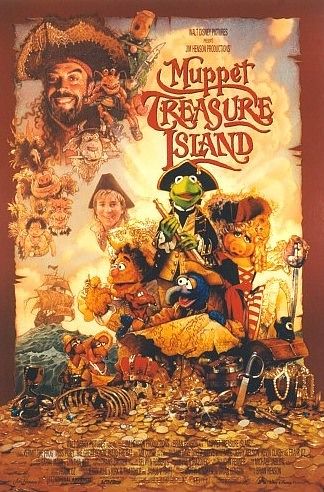
Create a login (it’s free), and search for Treasure Island. You can either Muppet Treasure Islandread as a member of the public or you can join my group. I’ll be honest and say I haven’t even figured out what difference it makes yet.

I’ll probably try to blog a bit about the experience since all I’ve said about it to this point has mostly been speculation about what it must be like to read on Book Glutton rather than actually spending a lot of time reading.

Anyway, Yo Ho Ho! And all that. I think there’s a National Speak Like a Pirate Day somewhere. Probably comes out of Stevenson, or Disney’s take on Stevenson, or Johnny Depp’s take on Disney.

Here’s to intertextuality. Hope you come along.