Scandal mongerers alert! Barack Obama’s heretofore unacknowledged sex-change operation threatens to derail his quest for the White House.
(Side Note: I have discovered that including many words like “sex-change,” “porn,” and “diarrhea” really pumps up your blog stats. Count on them from here on out).
“If Clinton loses the nomination, do women lose? Rights? Power? Visibility? Clout? Are they not taken as seriously by the political establishment? A month ago I would have told you yes. Now I believe the answer is no. Why? Because metrosexual, pro-choice, pro-health care, anti-poverty Obama is, in every political sense at least, more of a woman than Clinton.
====
“Clinton’s female supporters who are watching Obama’s movement coalesce, solidify and take over should console themselves there will be a woman Democrat in the White House either way if the Democrats win the general election. The nominee will either be a woman with double-X chromosomes, or one with XY chromosomes who votes more like a woman than most with XX.”
Perhaps Bonnie Erbe has come up with the true and deeply troubled reason that Barack Obama draws tens of thousands of screaming female fans at whistle stop campaigns throughout the country.
He’s a gender-bender.
And just what does this say about the tens of thousands of screaming young and middle aged men who rush the stage. Deeply repressed problems with gender identity no doubt. Something we have always suspected of limp-wristed liberals and moderates anyway, yes?
Seriously, though, the gender weirdness of this campaign continues to demonstrate that Americans have a keenly developed, if not completely sick, sense of the politics of sexuality and gender. Obama is suspicious because he is too much of a woman, and Clinton is unappealing because she is too much of a man.
It is interesting to me, though, that Obama combines and focuses a great deal of discursive energy when it comes to the politics of not only race but gender. Several years ago in a class I was discussing the tradition of Black Christs within African American religion. My students, mostly young female Christians, largely agreed when one said that as she tried to imagine Christ as an AFrican American, she imagined he was more definitively male than the white Christ she had grown up with.
Well, this is the classic stereotype that we’ve lived with since the 20s. (I realize I’ve already posted on this, but I just can’t get over it) Black men are somehow supposed to be outrageously and uncontrollably masculine–all brawny testosterone, no brains, no tenderness. White men are somehow soft and feminine–at least if they are religious or educated. Jesus holding Mary’s little lamb. Obama’s “metrosexuality”–his softness, his charm (think, what kind of men do we describe as charming?)–humanizes the threatening masculinity his blackness might otherwise entail for white audiences. Clinton’s ill-fated effort to paint Obama as a seducer, as well as the effort to link Obama’s appeal to Jesse Jackson was not only dismissive, it was also an effort to link him to an older form and stereotype of threatening black male sexuality.
But now that we know he’s actually a woman. We don’t have to worry about any of that, do we?
Is it any wonder that the rest of the world wonders when we will grow up?
What young family wouldn’t hold out the image of a sexually precocious 12-year-old as the image they hope their young daughters will have dancing in their heads as those innocent heads hit the pillow at night. The London Times reports that Woolworths has had to pull a certain ill-named piece of bedroom furniture from the market after a widespread internet protest by offended mothers.
“The Lolita Midsleeper Combi, a whitewashed wooden bed with pull-out desk and cupboard intended for girls aged about 6, was on sale on the Woolworths website for £395.”
……
“Whereas many mothers were familiar with Vladimir Nabokov and his famous novel, it seems that the Woolworths staff were not. At first they were baffled by the fuss. A spokesman for the company told The Times: “What seems to have happened is the staff who run the website had never heard of Lolita, and to be honest no one else here had either. We had to look it up on Wikipedia. But we certainly know who she is now.””
However, given the international state of our reading crisis, perhaps its worth asking how so many mothers even knew who Lolita was. I wonder if they read the book or saw the movie.
In any case, cultural illiteracy will get you nowhere.
Still, I’m just a tad bit suspicious about Woolworth’s protestations
According to the same Times article, the Brits business community has a penchant for salacious pitches to the preadolescent crowd:
“In 2006 Tesco was removed its pole-dancing kit from the toys and games section of its website after it was accused of destroying children’s innocence.”
A pole-dancing kit. What every nine-year old girl wants for Christmas.
“In 2005, WH Smiths came under fire for selling youngsters stationery bearing the Playboy bunny – a symbol of the pornography empire.
“Prior to that Bhs decided to withdraw its Little Miss Naughty range of padded bras and knickers for pre-teen girls after attracting criticism.
I’m not sure what’s naughty about knickers. I thought it was just a weird British word for underwear. And according to the grammar they were padded anyway. Sounds uncomfortable to me. Still, I draw the line at padded bras for pre-teens.
For the record, I did a Google search on women named Lolita. Turns out there are thousands of them. And not just Lolita Davidovitch. And most of them aren’t even on sex sites. I’m sure that the Woolworth’s bedrooms set was probably named after the owner’s great aunt Lolita in Birmingham. And after all, it’s not pole-dancing. Come on people, lighten up!
Anyway, though I’m appalled at the marketing division’s literary illiteracy, isn’t it a great thing to see literature making a difference in the world.
More solid evidence that the NEA is correct in saying readers are more likely to be social activists. 😉
I still remember my shock and dismay a couple of years ago when I clicked on to the New York Times book page and found an advertisement of much a younger, more handsome and vaguely Mediterranean-looking young man who oozed sex appeal as he looked out at me from the screen with headphones on his ears.
“Why Read?” asked the caption.
Surely this was the demise of Western Civilization as we knew it, to say nothing of being a poor marketing strategy for a newspaper industry increasingly casting about in vain for new readers.
Nevertheless, it seems to me that audiobooks have developed a generally sexy and sophisticated cache for literary types that other shorthand ways to literature typically lack. As an English professor, I’ve been intrigued lately that a number of colleagues around and about have told me they listen to audiobooks to “keep up on their reading.” To some degree I’ve always imagined this as a slightly more sophisticated version of “I never read the book, but I watched the movie,” which has itself been about on a par with reading Sparknotes.
However, as I mentioned in yesterday’s post, another colleague recently took issue with my general despairing sense that the reading of literature, at least, is on the decline, no matter the degree to which students may be now reading interactively on the web. “Yes,” she said, “but what about audiobooks?” She went on to cite the growth in sales over the past few years as evidence that interest in literature may not be waning after all.
My immediate response is a little bit like that of Scott Esposito over at Conversational reading. In a post a couple of years ago Scott responded to an advocate of audiobooks with the following:
Sorry Jim, but when you listen to a book on your iPod, you are no more reading that book than you are reading a baseball game when you listened to Vin Scully do play-by-play for the Dodgers.
It gets worse:
[Quoting Jim] But audio books, once seen as a kind of oral CliffsNotes for reading lightweights, have seduced members of a literate but busy crowd by allowing them to read while doing something else.
Well, if you’re doing something else then you’re not really reading, now are you? Listen Jim, and all other audiobookphiles out there: If I can barely wrap my little mind around Vollmann while I’m holding the book right before my face and re-reading each sentence 5 times each, how in the hell am I going to understand it if some nitwit is reading it to me while I’m brewing a cappuchino on my at-home Krups unit?
It’s not reading. It’s pretending that you give a damn about books when you really care so little about them that you’ll try to process them at the same time you’re scraping Pookie’s dog craps up off the sidewalk.
I have to grin because Scott is usually so much more polite. Nevertheless, I cite Scott at length because viscerally, in the deepest reaches of my id, I am completely with him and he said it better than I could anyway.
However, it’s worth pausing over the question of audiobooks a little further. I don’t agree with one of Scott’s respondents over at if:book, who describes listening to audiobooks as a kind of reading. But it is an experience related to reading, and so it’s probably worth parsing what kind of experience audiobooks actually provide and how that experience fits in with our understanding of what reading really is.
As I’ve said a couple of times, I think we lose sight of distinctions by having only one word, “reading,” that covers a host of activities. I don’t buy the notion that listening can be understood as the same activity as reading, though the if:book blog rightly points out the significance of audiobooks to the visually impaired. Indeed, one of my own colleagues has a visual disability and relies on audiobooks and other audio versions of printed texts to do his work. Even beyond these understandable exceptions, however, Scott’s definition of reading above privileges a particular model of deep reading that, in actual fact, is relatively recent in book history.
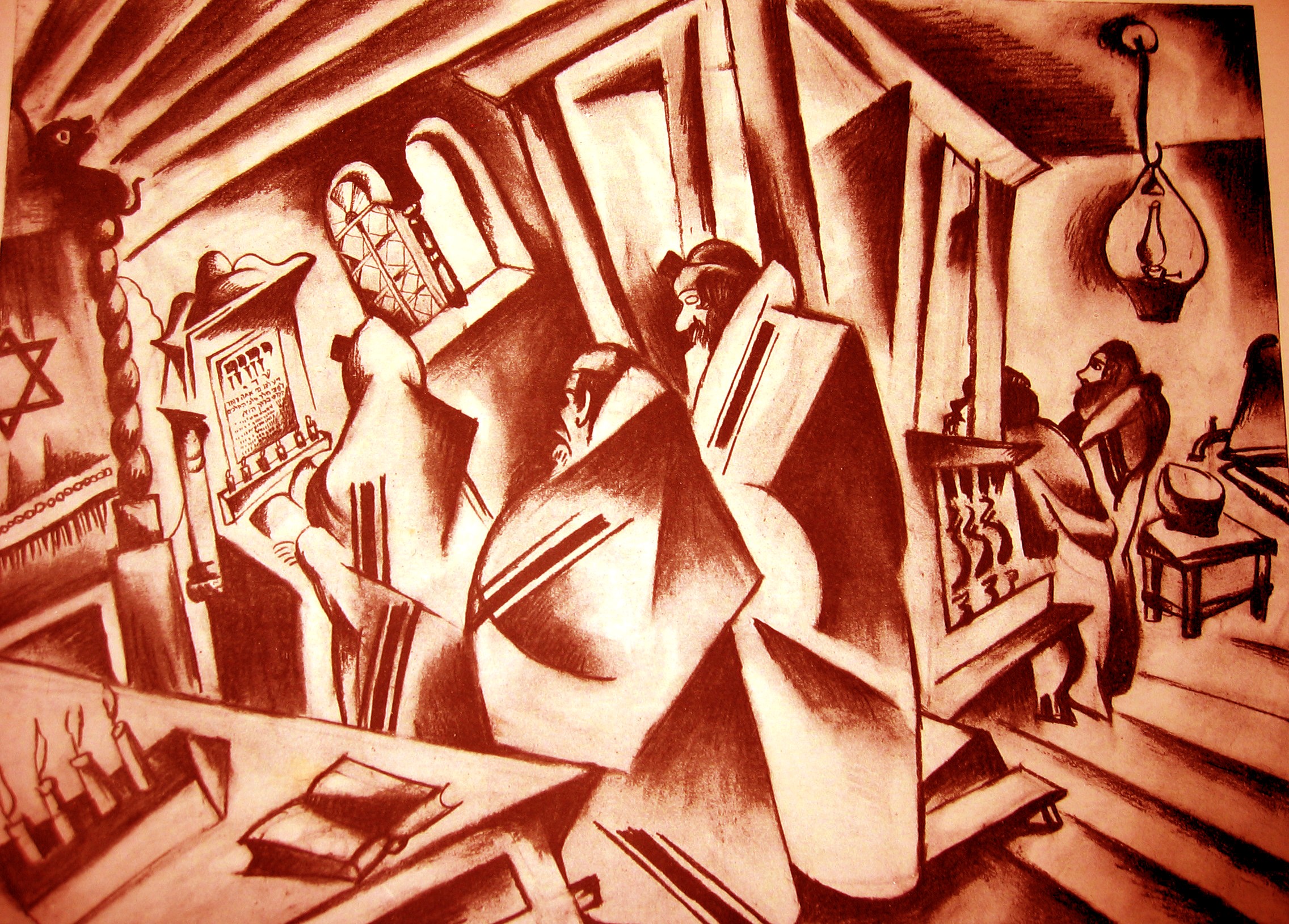
Indeed, going back to the beginnings of writing and reading, what we find is that very few people read books at all. Most people listened to books/scrolls/papyri being read. The temple reader and the town crier are the original of audiobooks and podcasts. In ancient Palestine, for instance, it’s estimated that in even so bibliocentric a culture as that of the Jewish people only 5 to 15% of the population could read at all, and the reading that went on often did not occur in deep intensive reading like that which Scott and I imagine when we think about what reading really is. Instead, much of the experience of reading was through ritual occasions in which scriptures would be read aloud as a part of worship. This is why biblical writers persistently call on people to “Hear the Word.” This model of reading persists in Jewish and Christian worship today, even when large numbers of the religious population are thoroughly literate. See Issachar Ryback’s “In Shul” for an interesting image from the history of Judaism.
Indeed, in the history of writing and reading, listening to reading is more the norm than not if we merely count passing centuries. It wasn’t until the aftermath of the Reformation that the model for receiving texts became predominantly focused on the individuals intense and silent engagement with the written word of the book. In this sense, we might say that the Hebrews of antiquity weren’t bibliocentric so much as logocentric—word-centered but not necessarily book-centered.
Along these lines, the model of intense engagement—what scholars of book history call “intensive reading”—is only one historical model of how reading should occur. Many scholars in the early modern period used “book wheels” in order to have several books open in front of them at the same time. This is not exactly the same thing as multi-tasking that Scott abhors in his post, and it’s not exactly internet hypertexting, but it is clearly not the singular absorption in a text that we’ve come to associate with the word “reading.” “Reading” is not just the all-encompassing absorption that I’ve come to treasure and long for in great novels and poems, or even in great and well-written arguments. Indeed, I judge books by whether they can provide this kind of experience. Nevertheless, “Reading” is many things.
But to recognize this is not exactly the same thing as saying “so what” to the slow ascendancy of audiobooks, and the sense that books, if they are to be read at all, will be read as part of a great multi-tasking universe that we now must live in. Instead, I think we need to ask what good things have been gained by the forms of intensive reading that Scott and I and others in the cult of book lovers have come to affirm as the highest form of reading. What is lost or missing if a person or a culture becomes incapable of participating in this kind of reading.
By the same token, we should ask what kinds of things are gained by audiobooks as a form of experience, even if I don’t want to call it a form of reading. I’ve spent some time recently browsing around Librivox.org, which I’ll probably blog about more extensively in a future post. It’s fair to say that a lot of it turns absolutely wonderful literature into mush, the equivalent of listening to your eight-year-old niece play Beethoven on the violin. On the other hand, it’s fair to say that some few of the readers on that service bring poetry alive for me in a way quite different than absorption in silence with the printed page. As I suggested the other day, I found Justin Brett’s renditions of Jabberwocky and Dover Beach, poems I mostly skim over when finding them in a book or on the web, absolutely thrilling, and I wanted to listen to everything I could possibly find that he had read.
This raises a host of interesting questions for a later day. What is “literature.” Is it somehow the thing on the page, or is it more like music, something that exists independently of its graphic representation with pen and ink (or pixel and screen). What is critical thinking and reading? I found myself thrilled by Brett’s reading, but frustrated that I couldn’t easily and in a single glance see how lines and stanzas fit together. I was, in some very real sense, at the mercy of the reader, no matter how much I loved his reading.
This raises necessary questions about the relationship between reader and listener. Could we tolerate a culture in which, like the ancient Greeks and Hebrews, reading is for the elite few while the rest of us listen or try to listen. At the mercy and good will of the literate elite—to say nothing of their abilities and deficiencies as oral interpreters of the works at hand.
Garrison Keillor, a personal favorite, has broken for Obama. As I suspected a while back, Obama seems to be doing well with the literary crowd—gathering in Michael Chabon, Toni Morrison, Alice Walker, and now Garrison Keillor. There may be others, but I can’t find them in the five minutes I can afford looking around on the web. Still, it’s not a total lock. Maya Angelou and John Grisham have put in for Clinton, with Angelou putting forth with about as much sagacious pomposity as Morrison mustered for Obama. According to Angelou, embedded below, we should be attracted to Clinton because “she gives herself authority to be in her own skin… to be who she is.” We further discover that Hillary has the honesty to stand up and say “Yes, I am a woman.” And further that she is her mother and grandmother and an great grandmother and great greats. And all women. And she is even Maya Angelou.
Going to be a crowded Lincoln bedroom. And here we thought we were only going to get a two-fer with Hillary and Bill.
Seriously though, I have some trouble with the notion that women ought to vote for Hillary because she’s a woman, any more than a man ought to vote for Obama because he’s a man or because he’s black, or McCain because he’s a man or because he’s white. This being said, I know it happens, consciously and unconsciously. So I don’t have an absolute problem with Angelou being straightforward about it. What strikes me, however, is that Clinton supporters have been quite frank and straightforward in arguing that people ought to vote for Clinton because she’s a woman. I don’t see quite the same straightforward statement by any prominent black supporters of Obama. And of course it would be absolutely politically impossible for someone to get up and say they were voting for Obama or McCain or Huckabee because they were men. So the rhetorical strategies are still interesting. What’s allowed and what’s not allowed. My general sense, still, is that Obama is the wiser in playing down a unique appeal to a “natural” constituency. Can Clinton speak for and to everyone. She doesn’t really try to make that case, and I imagine it will cost her in a general election.
Back to Keillor. Much more understated as befits a Minnesotan. Though, it must be said that Keillor’s understatement is no less strategic or conventional the Angelou’s and Morrison’s self-inflation.
“I’m happy to support your candidacy, which is so full of promise for our country,” the best-selling author and humorist wrote in a letter declaring his support. “Seven years of a failed presidency is a depressing thing, and the country is pressing for a change and looking for someone with clear vision who is determined to break through the rhetorical logjam and find sensible ways to move our country forward. That’s you, friend.”
“And of course it will be exciting to have a president who can speak with grace and power to the American people,” Keillor wrote.
A war that’s left 10s of thousand dead or maimed, and has saddled our grandchildren with crippling debts has left Keillor depressed. Well, perhaps this is self-inflation of a very understated sort. From what I gather though, many things leave the good Lutheran depressed, and for the melancholy another thirty or forty thousand dead is par for the course in the scheme of things.
Keillor’s compliments to Obama’s rhetoric stand out. Obama couldn’t muster a great deal of grace and power in his response, however.
“I’ve been entertained and inspired by Garrison Keillor’s work through the years,” Obama said in a statement. “As president, I will wake up every day thinking about how I can help make life better in places like Lake Wobegon all across the country.”
Umm. Ok. This is EXACTLY why I thought Obama was running. To help all those good folks with white picket fences in the land that time forgot. It’s an interesting contrast, of course, since Keillor, despite his liberalism, has made his literary career on the examination of a white ethnic community as “typically American” in an era when it’s typicality has faded by the hour. Indeed, there is no measure of how atypical Lake Woebegon really is than the candidacy of Barack Obama.
Have they even seen black people in Lake Woebegon. I have my doubts. As much as I love the show. I can’t remember a single one.
The literary sweepstakes continue. News reports tell us that Stephen King has thrown his very considerable weight behind Obama.
This may be a good thing. Barack’s rather weighty reading list, his endorsement by His Weirdness Michael Chabon and by Her Highness Oprah Winfrey, and his rather stunning eloquence have left him in distinct danger of not being pegged as a “regular guy.”
Given that I doubt Obama is going to be out stomping through a field with a 12 gauge in his hand, it’s probably a good thing that a literary celebrity known for mayhem, murder and mystery has his back. Stephen King is the everyman’s literary favorite, and Obama doesn’t even have to read him. (Personal aside: I think King is one of the most interesting and bizarre self-reflexive writers on the pathologies of writing and reading. I hope to have a chapter on him in the book I am currently fantasizing about).
Seriously though, there are literally thousands of sites out there devoted to books and reading in one way or another, many of them very good. So I have been pretty choosey about what I put on my blogroll—only the things about books and reading I actually bother to read regularly set alongside a few close friends who write about various and sundry. Teleread is, I think, one of the best sites for trying to think through—and listen to others think through—the issues and news surrounding e-books and digital literacy generally. There seems to be a sensible assumption that reading books online is not going away, but the site isn’t clogged with folks I sometimes derisively call digital utopians. There’s an effort to be self-critical, and comments that question ruling assumptions about digital books or internet culture generally are welcome. It’s very much worth a look.
Techno myths go to school.
In his most recent blog, Mark Bauerlein calls attention to the huge gap between the mythology that kids can now basically teach themselves on the internet and the actual facts about kids ability to judge and assimilate online materials. He cites an ETS study that gives a rather grim picture of students ability to sort through the waves of things they find on the net:
The report concluded: “Few test takers demonstrated key ICT literacy skills” (ICT is short for Information and Communications Technology). Only 35 percent of the subjects could narrow an overly broad search properly, and only 40 percent of them chose the right terms to tailor a search effectively. In constructing a slide presentation, only 12 percent of them stuck to relevant information.
When asked to evaluate a set of
Web sites for objectivity, authority and timeliness . . .
– 52% judged the objectivity of the sites correctly
– 65% judged the authority of the sites correctly
– 72% judged the timeliness of the site correctly
– Overall, only 49% of test-takers identified the one
website that met all criteria
Even allowing for some margin of error, it still seems we’re a good ways away from the possibility of doing away with teachers entirely. And of course, this says very little about the ability of students to interpret and assimilate such materials into writing of their own—something that the testimony of writing in intro composition classes suggests might be very dismal indeed.
This speaks again to my general sense that the argument offered by digital utopians that people are reading just as much as ever, they’re just reading on the web, isn’t really an argument, it’s a platitude. We need to be thinking about what students are reading, how they are reading it, in what contexts, and how they put that reading to use. We would then be in a better place to judge what we are gaining and losing by the fact that students are no longer reading or wanting to read traditional long form texts.
Friends, given the disaster that is ongoing in Kenya, I decided to create a new page, “Support Kenya,” that would allow folks to get involved (the few dozen of you who visit this page, that is:)). There’s a link on that page from folks at AVAAZ.org that will allow you to contact Secretary of State Condoleeza Rice to urge more decisive diplomatic intervention on the part of the United States.
Ok. Again. Not. However, I remain fascinated by the rhetorical irresponsibility that blogging makes possible.
In keeping with the literary politics of the season, the New York Times reports this morning that there’s a new book out with women writers reflecting on Hillary Clinton. The title, Thirty Ways of Looking at Hillary Clinton, recalls Wallace Stevens “Thirteen Ways of Looking at a Black Bird.” The choice apparently reflects the content of the book since Stevens’s poem is all about how perspective makes and in some sense is the object of our reflection.
I
Among twenty snowy mountains,
The only moving thing
Was the eye of the blackbird.
II
I was of three minds,
Like a tree
In which there are three blackbirds.
III
The blackbird whirled in the autumn winds.
It was a small part of the pantomime.
Ok, I hope you have a better time making sense of this than I do with my students. After saying “This poem is about perspective” conversation mostly comes to an end and we twiddle our thumbs for fifty minutes. Nevertheless, the blackbird, and apparently Hillary, are nothing apart from how we construct them in our imaginations.
Kakutani isn’t terribly impressed, but I have to say that I find Kakutani too often follows the unacknowledged dictum of many contemporary book and movie reviewers: Slander everything unless you find it absolutely impossible not to. Finding fault too often substitutes for seriousness.
“On a shelf in my kitchen is a campaign button that I picked up during the 1992 presidential race. Over a photo of Hillary (bangs and headband phase—which was basically my look then, too) are the words ‘Elect Hillary’s Husband.’ Back then, the slogan produced a kind of giddy frisson: not only was the candidate just like someone I could have gone to college with—a baby boomer—but his wife was, too. And she had a job! I had only known first ladies as creaky battleaxes who sat under hairdryers and wore brooches. The thrill associated with that button feels far away now, and it’s hard to know exactly why. There’s no doubt that the rinky-dink scandals of the Clinton administration and the dismal parade of special prosecutors took the gleam off the fresh start that the Clintons brought with them to Washington. But that doesn’t quite explain how now, fifteen years later, there is not more simple exuberance at the idea that we may be about to elect our first woman president.
….
“No other politician inspires such a wide range of passionate responses, and this is particularly true among women. As I talked with women about their reactions to Hillary, some themes came up again and again. Many women were divided within themselves as to how they feel about her, and I noticed a familiar circle of guilt: these women believe they should support Hillary as a matter of solidarity. But, because they expect her to be different from (that is, better than) the average male politician, she invariably disappoints them; then they feel guilty about their ambivalence. Some feel competitive with her. Having wearily resigned themselves to the idea that ‘having it all’ is too much to hope for, they view Hillary as a rebuke: how did she manage to pull it off—or, at least, to appear to pull it off? Other women say they want to like her but are disturbed by the anti-feminist message inherent in the idea of the first woman president getting to the White House on her husband’s coattails. Then there are women, like the late playwright Wendy Wasserstein, who are queasy over the way Clinton’s popularity spiked only after she was perceived as a victim. When it became clear that Hillary was going to stand by her man after the Lewinsky fracas, Wasserstein wrote a disheartened Op-ed piece in the New York Times. ‘The name Hillary Rodham Clinton no longer stands for self-determination, but for the loyal, betrayed wife,’ she wrote. ‘Pity and admiration have become synonymous.’
Side note: Morrison’s text is one of many that echo Stevens’s poem. Gates’s Thirteen Ways of Looking at a Black Man, Smiley’s Thirteen Ways of Looking at a Novel. A quick Google search shows 44,600 references to the phrase “Thirteen Ways of Looking.” There are, I guess 17 extra ways of looking at the prismatic Hillary Clinton. I find Wallace Stevens resilient popularity and influence on our culture a bit boggling. Maybe it’s because most of us are leading the dull lives of insurance salesman and long to release our inner poets.
Thus the popularity of blogging? Anyone can be a poet now. Everyone is.
Ok, maybe not. Still, Obama has the literary vote all but wrapped up, at least in San Francisco, or at least maybe in the Creative Writing program at Berkeley. Or maybe at least with students hoping to get an A on some other basis than their sparkling prose. I’m sure, however, that the .0000000001% of the electorate who have even heard of Chabon will be impressed with this endorsement.
Chabon’s endorsement–already much pondered over by the press–mainly in their saying, “Who is this guy anyway?” –can be viewed below.
The New York Times today gives a serious turn to all the random speculation that Hillary’s tears—or more precisely, near tears—may have played a role in her victory in New Hampshire.
“Short, emotionally charged narratives — story fragments, of a certain kind — can travel through a population faster than any virus and alter behavior on a dime, they say. Under certain conditions, this behavior is especially infectious, research suggests, and anyone eager to play Monday morning quarterback on the New Hampshire vote should take them into account.
“’Any story that is short and powerful and throws into relief exactly the sort of issues people are thinking about at the moment they’re making a decision can have enormous impact,’ said Francesca Polletta, a sociologist at the University of California at Irvine who analyzed the effect of personal stories on the civil rights movement in her book It Was Like a Fever: Storytelling in Protest and Politics.
“Mrs. Clinton’s emotional reaction to a question about how she was holding up under the pressure was not only genuine, many voters apparently decided, but it formed a powerful response to an incident during the most recent debate, when her rival John Edwards sided with Mr. Obama in a pointed exchange to one of her questions. A mininarrative was born.”
The story goes on to show statistically that more undecided women voters lurched toward Hillary in the immediate aftermath of the debate. I hate to say “I told you so,” but in the aftermath I said that I thought the tears would give an immediate 5% bump to Hillary’s poll numbers, this despite seeing all the discussion among women and having a couple of personal conversations with others who were appalled and felt that Hillary had shown an unacceptable weakness that “put women back.”
You don’t need to have a degree in social pscyhology to understand this. You just need to have an elementary grasp of gender narratives in Western culture, and perhaps to pay attention to your immediate emotional instincts before worrying about what people might think if they knew you were feeling. I felt the pull of those tears. (And I’m not even a woman. Imagine.) Leaning toward Obama, and still leaning I must say, I felt that moment pull me back, and to some degree still pulling me back at least to the degree that I’m still willing to listen to what Hillary has to say.
I still think there’s a double standard in play here, and not the one typically assigned to political divisions between men and women. The sympathy vote for Hillary goes to her because, apparently, people thought Edwards and Obama were ganging up on her. I want to say, “Oh, Boo Hoo.” Edwards’s decision to gang up on Clinton was a political calculation that she had all the money, she had a lot of the establishment power, and if he were to have a chance she would have to go. In other words he treated her like he would treat any other man in the race. But many, mostly women, read it as two men ganging up unfairly on a woman. No doubt this could have been in play. But Republicans were ganging up on Romney because he had all the money, a lot of the establishment power, and he seemed vulnerable and open to attack because of the Mormon factor (a calculation for Huckabee at least) and the flip-flop factor (a calculation for everyone). Now if, as he sat down for coffee with potential voters, Mitt had let his voice quaver the next day about how difficult it all was, do we imagine he would be getting a sympathy vote. Somehow I doubt it, but not from women, and certainly not from men. Perhaps from Mormons and those with money. Or those given to changing their minds.
The reaction provoked by Hillary’s tears spoke to very deep gender stereotypes. I just got done performing the role of Alfredo in Verdi’s La Traviata. At one point late in the opera Alfredo publicly berates and shames the diva Violetta—basically calling her a wanton whore (important difference from the cultured courtesan she actually is). In our staging, during this moment Violetta breaks down in tears. All the men and all the women rush or lean in the direction of Violetta even as they shout Alfredo down.
[Hey, isn’t this a fabulous rendition of me singing one of the most difficult pieces in the repetoire (heh, heh).]
Anyway, it seems to me that something similar happened with at least some significant percentage of the undecided vote in New Hampshire. The combination of Obama and Edwards tag teaming and Hillary’s next day tears provoked a rush of female sisterhood and, probably to some degree, male instinct to protect the endangered female. I don’t know if it was planned or not, but the masterstroke of the Clinton campaign was to turn a feminine stereotype in to a political strength.
Still, all that aside, I am actually really interested in the important role of emotion in this election, and in our lives generally. I actually think it was fine that Clinton teared up, and that Obama gets the citizenry’s adrenaline flowing, if not their hormones. In dismissing Barack as a kid who is purveying fairy tales Bill Clinton misses—and bizarrely so, given his history as a politician—that human beings don’t live by reason alone, or by bread. (Besides outraging the black community–read the blogs, Hillary, the black community doesn’t need Barack to fan anything in to flames)
It’s not just the economy stupid. It’s not just the most rational man or woman for the job. [If this were so, surely Gore would have won in a runaway, the rationalist in me says]. Human beings need to be inspired, they need to be moved, they need to transcend the instrumentalism that dominates their lives day to day and see that such day-to-dayness can be connected to something bigger than themselves. Obama does this seemingly by breathing. Hillary’s tears connected undecided women to some sense of transcendent sisterhood—and, of course, it helped tremendously that the Clinton folks had superior organization in the end.
[Insert huge unjustified conceptual leap of associational logic here]
Ok, well, what does this have to do with English studies? Probably absolutely nothing, I guess. But I’ve been reading a lot lately about the crisis in the discipline, the decline of English majors, the lost sense of purpose, etcetera ad nauseum. There are various things going on here, multiple forms of causation and so forth. Still, I sense a very big disconnect between the normative passions of the profession and the passions and desires of the electorate…er, rather, student body and prospective student body.
Indeed, the idea of talking about the passions of the profession seems to be almost an oxymoron. Isn’t passion the opposite of professionalism? I remember a meeting early in my graduate career at Duke where Stanley Fish said something on the order of “If you think you are pursuing a graduate degree in English because you love literature, you are in the wrong profession.” Well, there is a certain sense in which, as with so many things, Fish is precisely right in this formulation—but perhaps disastrously so.
The professionalism of the discipline functions at odds with the very things that brought people to the discipline in the first place. The profession, seeking the dignity of professionalism and the seriousness accorded academic subjects, necessarily negates the passions associated with literature. Think, for instance, of how readily we talk about having a passion for teaching, and how rare it would be to hear someone at the MLA conference talk about their passion for literature. Good reason for this. We in the academy generally think teaching is for amateurs, and thus something that you can love and be passionate about. Besides the fact that it wins you points with search committees–at least at some schools–whereas being passionate about literature gains you nothing. (“You’re Passionate about literature??? That’s sooo 1950s.”)
Students, however, and prospective students especially in this context, consider our majors not because it will make them better lawyers or middle-level managers, or because they want to be sophisticated cultural critics. In 7 years of running sessions for prospective students I regularly ask them why they are there, why they are even bothering to think about studying literature. In 7 years I have never had a student say even once that they are going to study literature because they want to be a literary critic or literary theorist, I have never once had a student say they are going to study literature because they want to have a dispassionate and philosophical grasp of the semiotic status of nose hair in Jane Austen, and I have never once had a student say they are going to study literature because they hope to study the conflicts in interpretation represented by contemporary cultural theory. Never once. Imagine.
They all say they want to study literature because they love it. Asked why they love it they say because it changed some part of their lives, because it helped them understand others, because it helped them understand themselves, and on and on. All the reasons that we, in our dispassionate dismissing of youthful idealism, have learned to sneer at secretly in our faculty lounges. By some miraculous and unimaginable twist of fate, such 17 and 18 years old had learned to read and get something out of literature and to somehow think it would make a difference to the world if they read more of it. Young people want to be inspired and to be moved, and at our peril I think we’ve dismissed that desire as beneath importance in our quest for professional status.
A couple of examples. As an undergraduate I was a history major and bored to tears by my history profs. Then I had Joe McClatchey, an unknown to almost anyone who didn’t have him as a student or who didn’t work with him at Wheaton College, but the person to whom I dedicated my first book.
Out of Western World Lit I, I remember almost nothing about the books we read (more at some later date on Pierre Bayard’s take on whether books we’ve forgotten can actually be counted as having been read). What I do remember is the day Joe McClatchey showed slides of various satyrs and other vaguely evil beings from Roman mythology. He suddenly shuddered visibly, turned away from the screen, and whispered “Unnatural!” He wasn’t acting. Now, all this is laughable to sophisticates in the current academy. But I was profoundly moved that there was something important to care about in books.
Another day McClatchey was reading Milton describing the fall of Adam in Paradise Lost. In the middle of the passage, Joe McClatchey teared up like Hillary Clinton and said, “I can’t go on.” He closed his book and leaving papers and books behind, fled the room. Again, incredulous laughter from the contemporary sophisticate, but we were all in awe. What it said to me as an undergraduate was, “Wow, there’s something more important going on here than getting a grade, and something more important than taking a class so I can get in to law school.”
Assess that, o ye provosts of the world.
At this stage of the game, of course, we’ve become so sophisticated that we’ve about decided that there is no such thing as “literature” and we have lost an object of critical investigation. May be. But I think we would do better, even in these late days of the English crisis, to recover our first love. To figure out why these things that we can only call “literature” with quotation marks to sanitize our embarrassment, somehow nevertheless move us and change us and teach us, all without and well beyond the teaching that comes from the latest theoretical or critical fad. We need more teachers with a passion for literature, a passion for reading that will match their passion for teaching.
It will, of course, take a great deal more than tears and shuddering to repair the condition of the humanities in the world. But by rediscovering that first love we might discover that our passion leads to conviction, which leads to action and changes in ourselves and in others. We might even discover that students can think that literature rather than our theories about it is relevant to the world.
I’ve seen a variety of things like this in recent years, and I suspect to some degree that seeing the book as a form of art is tied to a sense of its demise. As things die, they become works of art, perhaps? The Freudians have already covered this, I’m sure. In the infancy of books, of course, books were also thought of as treasurers to be handled like works of art or other revered objects. Books in general were far too expensive for the masses to obtain, and as a general rule this continued for a very long time. Owning books, as much as reading them, signified your cultural and class superiority. This all changed gradually over centuries after Gutenberg, but changed with a vengeance with the invention of the paperback.
Perhaps now that television and the internet have taken on most of the cultural purposes of the paperback and the newspaper—cheap entertainment and ready information for the masses—books are again left to become objects of art, treasures indulged in primarily by a small coterie of collectors. Strikes me as depressing, just a bit, but I still love these photos.
Leslie Fiedler. Who?
I couldn’t help but notice Scott’s post on Friday noted a new book by the late Leslie Fiedler, whom Scott admits he didn’t know. Alas, how far the mighty have fallen. I used to want to be Leslie Fiedler. He made cultural criticism seem romantic. Now cultural criticism has all the romance of oral dentistry or working at Chic-Fil-a. (Does anyone know why they spell it this way?)
Seriously though, Fiedler was one of the few critics I’ve ever known whose work aspired to and in some instances could be called literary. This despite the much vaunted declarations that criticism and theory were literary genres, these made by literary theorists who could not write. Roland Barthes, who I think came up with the idea, also comes close to this ideal in some of his work. But declaration is not achievement. Fiedler and people like Barthes—Fiedler more than Barthes–are to be thanked for showing us that cultural criticism could actually care about and love language, that how it communicates can mesh with what it does communicate.
Clintons continue attack on literature…er…Obama.
By now, I guess, everyone has heard that Bill Clinton and hip-mate Hillary Clinton—or is it the other way around—got in trouble for deriding Obama as a purveyor of fairy-tales and fantasy. In some future post I think I’ll take up the idea that the Clintons who once represented the hopeful face of baby-boomerism, now represent the craggy and toothless grin of what to expect as baby-boomers start using canes and walkers. “No hope for you, people, you silly and naïve young whippersnappers.” My general sense is that the Clinton approach demonstrates again and again that they are part of the system, so broken by it that they have to replicate it, like dogs licking the hands of an abusive master. Trouble is they may be right. Systems persist for a good reason, the gradually wear down the hopes of those who would change them and they are impervious to appeals from those outside their own logic. The smart money still goes with Clinton, but for the moment I feel like I’m still young enough to hope.
But my real issue with all this is the Clinton’s perfidious campaign against the imagination and literature. (Beware those who use the term “perfidious” wantonly). As I pointed out in earlier posts, Clinton has all the literary imagination of a manual on how to fix my furnace. Hillary works too hard to have time for literature. Now they are using a perfectly wonderful and culturally important literary form as a derogatory epithet. As Vladimir Propp could tell them, fairy tales make us what we are.
Do those of us who are reading for our lives, an increasingly aggrieved and marginalized minority who must struggle against the glass ceiling of…well, something I’m sure…set in place by the billions of non-readers in the world, really need the Clintons piling on with their anti-literary epithets?
I think enough is enough. We need to stand up against unthinking and derogatory stereotypes of reading culture.


 As my colleague, Matt Roth, suggests it’s hard to know which is worse, that they made the bed in the first place, or that they didn’t know about
  temple reader and the town crier are the original of audiobooks and podcasts. In ancient Palestine, for instance,
 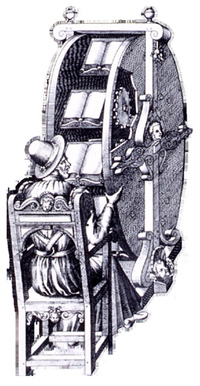 of them at the same time. This is not exactly the same thing as multi-tasking that Scott abhors in his post, and it’s not exactly internet hypertexting, but it is clearly not the singular absorption in a text that we’ve come to associate with the word “reading.” “Reading” is not just the all-encompassing absorption that I’ve come to treasure and long for in great novels and poems, or even in great and well-written arguments. Indeed, I judge books by whether they can provide this kind of experience. Nevertheless, “Reading” is many things.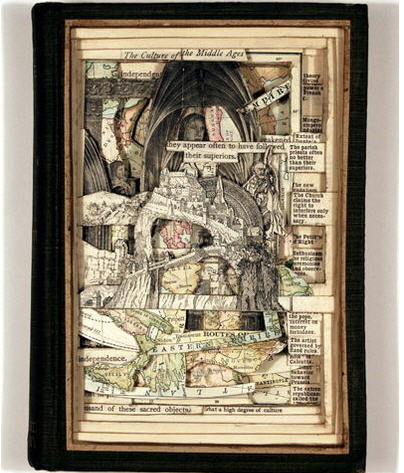
 Peter Kerry Powers