
A colleague who is a librarian and shares a lot of my interests in writing and reading sent me the following from a friends blog:
In a previous post my daughter blew me away with her use of eLocker to access her school files from home. Last night my son used MyAccess to write an essay online. Big whoop – right? Get this – it analyzed and graded it in an instant. Took about 3 seconds tops and he was looking at a score that broke out scoring elements not only in spelling and grammar (Word can do that) – things like content and delivery, organization, completeness of development. It was like having my 5th grade English teacher right there – red pen in hand. It saves all of his essays and projects and graphs out a cumulative progression over time, showing improvements and areas to work on. Incredible.
Here’s a snip from the site :
“With MY Access!®, students are motivated to write more and attain higher scores on statewide writing assessments. By using MY Access! in the classroom, teachers can provide students with the practice they need to improve their writing skills. The program’s powerful scoring engine grades students’ essays instantly and provides targeted feedback, freeing teachers from grading thousands of papers by hand and giving them more time to conduct differentiated instruction and curriculum planning.”
I wish I could share the enthusiasm, but I am more than a little skeptical. It may be the science/humanities divide in play, but there is no getting past the fact that a lot of this represents some of the absolutely worst things that are happening with writing in our secondary schools. And we continue to wonder why our kids can’t write and prefer to do anything but read. When we treat writing like filling in the blanks on a mindless test, and treat reading as a mechanical process that any computer can do for us, what message can our kids get but that language is something to be dispensed with as efficiently as possible, rather than one of the essential elements of our being human in the world. Something to be treasured and embraced and explored and played with; not something to slot in to the appropriate input on a machine
Just to be sure I wouldn’t go off on a completely uninformed screed (who would care? this is a blog after all), I did take some time to visit the MyAccess web site and go through the student demonstration. It is clearly more sophisticated than such programs used to be, and it does go beyond simple grammar and spell checkers. Still, it’s clearly caught up in a formal approach to writing that completely removes writing from the intentions and language of the writer, as well as from the interests and concerns of any particular reader or audience. The site makes a point of saying that it will grade for development and organization–as if these elements of writing existed somehow independently of the particular concerns and creativity of the writer, and as if we could address all audiences in a similar fashion. These folks claim that they grade “more accurately” than human readers. What could this possibly mean in grading a persuasive essay? How can a computer be more accurately persuaded than a human being. Absurdity.
One thing that the program grades for is sentence variation, vocabulary, and paragraph length. I admit this makes me nauseated. My daughter, a decent writer in part because she has learned to read a lot in our household, is asked by her teachers to write ten sentence paragraphs. If she has one sentence too many or too few she is graded down. This is done explicitly because of expectations of standardized tests–which I am sure will soon be graded by computer programs like MyAccess, to ensure that we are all standardized. There is no such thing as an acceptable length for a well-developed paragraph, and paragraph length in general is dependent upon genre and media. One of my big problems as a blogger and emailer is that I’ve learned to write for paper and ink, and my paragraphs are impossibly long for this particular media. Similarly, when I write for newspapers, I’m consistently reminded to keep my paragraphs in bounds. Same things go for sentences and sentence variations. First year students are stunned when I tell them a three word sentence can be perfectly OK. or that you can use a fragment. For effect, people, for effect. As if you were a human being instead of a machine. Some of them have actually been told by teachers to not use short sentences at all, and certainly never two in a row. Sentence variation depends deeply upon the kinds of emotional effects you are trying to achieve with readers, not on an abstract calculus that can tell you your sentence variation is good because you have X number of short sentences, X number of complex sentences, X number of such and so.
As for vocabulary. Students seem surprised when I tell them clever words can’t substitute for good writing. They assume a thesaurus indicated sophistication. I tell them to be sophisticated with the language that they know, and read and read and read to become sophisticated in the language that they don’t.
To some degree, indeed, I think this kind of write by numbers approach is designed to bypass the simple fact that kids no longer read enough–if they ever did–to become sophisticated writers and thinkers. Rather than give them the linguistic tools they need to become writers, we give them a formula to make sure they become the machines they are intended to be in this society. MyAccess isn’t part of the solution. It’s a sign of the problem.
(Bizarre sidenote: MyAccess tries to sell itself by saying it will provide 24 hour tutors at a low cost. Does anyone stop to think that in the world of the internet you can get free 24 hour “tutors” in online writing communities–or, if you really want to you can pay for it. At least you’ll be writing for other human beings rather than believing a computer program can substitute for someone that actually uses the language with which you have to communicate).
 integrity that characterized
  number XVII, republished as the following poem:
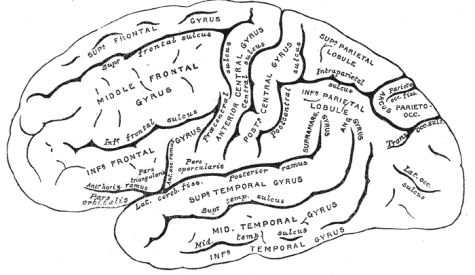 the nature of the comprehension we experience in reading versus listening. Second, while listening was taking place, there was more activation in the left hemisphere brain region


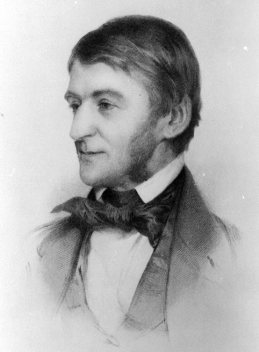 Emerson was a heretic who could say in all seriousness that poets are liberating gods, that we are part and parcel of God, and that he was a transcendatal eyeball (or something like that) creating the universe through his imagination. And we all thought Mitt Romney’s Mormonism might be just a little bit odd. What need the consolations of Christ when the advent of the world came through the exercise of the individual imagination, consort of the Oversoul?
 Peter Kerry Powers
