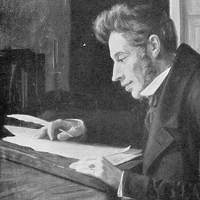
Digitization and the fulfillment of the book

My colleague in the library here at Messiah College, Jonathan Lauer, has a very nice essay in the most recent Digital Campus edition of the Chronicle of Higher Education.  Jonathan makes an eloquent defense of the traditional book over and against the googlization and ebookification of everything.   He especially employs an extended metaphor drawn from the transition to aluminum bats in various levels of baseball to discuss his unease and reservations about the shifts to electronic books and away from print that is profoundly and rapidly changing the nature of libraries as we’ve known them.  The essay is more evocative than argumentative, so there’s a lot of different things going on, but a couple of Jonathan’s main points are that enhancements we supposedly achieve with digitization projects come at a cost to our understanding of texts and at a cost to ourselves.

In the big leagues, wooden bats still matter. Keeping print materials on campus and accessible remains important for other reasons as well. Witness Andrew M. Stauffer’s recent Chroniclearticle, “The Troubled Future of the 19th-Century Book.” Stauffer, the director of the Networked Infrastructure for Nineteenth-Century Electronic Scholarship, cites several examples of what we all know intuitively. “The books on the shelves carry plenty of information lost in the process of digitization, no matter how lovingly a particular copy is rendered on the screen,” he writes. “There are vitally significant variations in the stacks: editions, printings, issues, bindings, illustrations, paper type, size, marginalia, advertisements, and other customizations in apparently identical copies.” Without these details, discernible only in physical copies, we are unable to understand a book’s total impact. Are we so easily seduced by the aluminum bat that we toss all wooden ones from the bat bag?

Let’s also acknowledge that our gadgets eventually program us. History teaches us that technologies often numb the very human capacities they amplify; in its most advanced forms, this is tantamount to auto-amputation. As weavers lost manual dexterity with their use of increasingly mechanized looms during the Industrial Revolution, so we can only imagine what effect GPS will have on the innate and learned ability of New York City cabbies to find their way around the five boroughs. Yet we practice auto-amputation at our own peril. We dare not abandon wooden bats for aluminum for those endeavors that demand prolonged attention, reflection, and the analysis and synthesis that sometimes lead to wisdom, the best result of those decidedly human endeavors that no gadget can exercise.

I have a lot of sympathy for Jonathan’s position, things like the revamping of the New York Public Library leaving me with a queasy hole in my stomach.  I’ve had a running conversation with Beth Transue, another of our librarians, about our desire to start leading alumni tours of the world’s great libraries, but if we’re going to do so we better get it done fast because most of them won’t be around anymore in a few more years, at least if the NYPL and its budgetary woes are anything to judge by.

At the same time, I think Jonathan overstates his case here.  I don’t think serious thinkers are assuming we’ll get rid of books entirely.  Although I currently think we are already living in what I’ve called an E-plus world, print will continue to be with us serving many different purposes. Jason Epstein over at the NYRB has a blog on this fact and progrognosticating the likely future and uses of the traditional book seems to be a growth industry at the moment. I don’t think the average student is too terribly interested in the material textuality that Jonathan references above, nor for that matter is the average scholar, the vast majority of whom remain interested in what people wrote not how the publishers chose to package it.  But those issues will continue to be extremely important for cultural and social historians, and there will be some forms of work that will only possibly be done with books.  Just as it is a tremendous boon to have Joyce’s manuscript’s digitized, making them available for the general reader and the scholar who cannot afford a trip to Ireland, authoritative interpretations of Joyce’s method, biography, and life’s work will still have to make the trip to Ireland to see the thing for themselves, to capture what can’t be captured by a high resolution camera.

That having been said, who would say that students studying Joyce should avoid examining the digitized manuscripts closely because they aren’t “the genuine article.”  Indeed, I strongly suspect that even the authoritative interpretations of those manuscripts will increasingly be a commerce between examination of the physical object and close examination of digitized objects since advanced DH work shows us time and time again that computerized forms of analysis can get at things the naked eye could never see.  So the fact that there are badly digitized copies of things in google books and beyond, shouldn’t belie the fact that there are some massively important scholarly opportunities here.

Jonathan’s second point is about the deeply human and quasi-spiritual aspects of engagement with traditional books that so many of us have felt over the years.  There’s something very true about this. It is also true that our technologies can result in forms of self amputation.  Indeed, if we are to take it to heart we need to admit that the technology of writing and reading itself is something that involves self-amputation.  Studies have shown that heavy readers alter their brains, and not always in a good sense.  We diminish the capacity of certain forms of memory, literally making ourselves absent minded professors.   Other studies have suggested that persons in oral cultures have this capacity in heightened form, and  some people argue that this generation is far more visually acute than those that preceded it, developing new abilities because of their engagement with visual texts.  So, indeed, our technologies alter us, and even result in self-amputation, but that is true of the traditional book as well as the internet.  This second is Jonathan’s larger claim since it seems to claim for traditional books as such a superiority in terms of something central to humanity as such. I am intrigued, with this argument that the book is superior for serious reflection and the quasi spiritual aspects of study that we have come to treat as central to the humanities.

I admit, I don’t buy it.

First, I admit that I’m just wary about attributing essential human superiorities to historical artifact and practices.  Homer as a collection of aural songs is not inherently inferior to the scrolls within which they were originally collected, then finding their apotheosis in the book form.  We have come to think of the book as exhibiting and symbolizing superior forms of humanity, but it’s not clear that book form was triumphant in the west because of these attributes.  Indeed, traditional Jews and others clearly think the scroll remains the superior spiritual form even to this day.  Rather, the codex triumphed for a variety of complicated reasons.  Partly Christian Churches for ideological reasons apparently wanted to distinguish their own writings from the writings of the Jews.  There may have been some more substantive reasons as well, though that’s not entirely clear: Anthony Grafton points out that many of the Christian innovations with the codex seemed to focus on the desire to compare different kinds of texts side by side (an innovation, I will point out, for which the internet is in many ways easily superior).  The codex also triumphed not because it was spiritually and intellectually superior but because it was, frankly, more efficient, cheaper, and easier to disseminate than its scrolly ancestors.  One good example is from the poet Martial who explicitly ties the selling of his poetry in codex form to making them easily and efficiently accessible to the common person:  “Assign your book-boxes to the great, this copy of me one hand can grasp.”

The entire trend of book history has been toward this effort to make texts and what they contain more readily and easily available to more and more people.  From the early clay tablets to the mass market paperback that let you carry Plato in your hip pocket, the thrust of the book has been toward broader and broader dissemination, toward greater and greater ease of use, toward cheaper and cheaper accessibility.  The goal of writing, even when that writing was imprisoned in libraries that only the initiated could enter as in Umberto Eco’s The Name of the Rose, has been open access.

The digitization that is occurring now comes to fulfill the book, not destroy it.

Secondarily, I guess I no longer believe fully in the spiritual or intellectual superiority of codex forms simply since it doesn’t comport with my experience.  As I do more and more of my reading of books with my various e-readers, I find that I have serious, contemplative, analytical, and synthetic engagements with all kinds of texts, from those hundreds of “pages” long and those not.  As I get used to the tools of various e-readers, theres almost nothing that can’t be accomplished in some way on an e-reader that is accomplished in traditional books.  Although I interact with texts differently now in a spatial sense, I am able to take fuller and more copious notes, I am able to mark texts more easily,  and if I can’t quite remember where something was in the book I can use a search engine to find not only a specific phrase or topic, but every single instance of that topic in the book.  Moreover, because every text represents an act of contemplation on and conversation with other texts, I can at the touch of a screen go and read for myself the interlocutors embedded within a book, just as those interested in Jonathan’s essay can touch my link above and decide for themselves whether I am reading him fairly.  Thus there are very obviously and seriously some ways in which e-readers are superior for serious analytical and interpretive readings of texts, or at least the equal to them.

All this having been said, I will say that there remains one way that I find the traditional paper book the clear superior to the e-book, and that has to do with my ability to make it mine.

I spoke a couple of days ago about the personal connection I felt to Kierkegaard in rereading him and discovering my many years of underlines, highlights and marginalia.  I even confess that I real Kimi Cunningham Grant’s new memoir on my iPad, but I still bought a hard cover at the reading–not because I thought I would be able to analyze it more effectively in hard cover, but because I wanted her to sign it for me.

This is a personal connection to the book that isn’t unimportant, but that is about my personal biography, and Kimi’s.  It’s not about the text, and frankly I doubt it will in the long run even be about literary history.  Some literary archivist somewhere is collecting all the shared comments on the Kindle version of Kimi’s book, and that massive marginalia will be fodder for some graduate student’s dissertation in a few decades.

I pity the poor graduate student who decides on such a project. But at least she won’t have to strain her eyes to decipher the handwriting.

Memories of Maurice: The Great Outpouring

The world is awash in memories of Maurice Sendak, and I’m so pleased that my colleague here at Messiah College, Anita Voelker, has a new editorial on her views of Sendak that just came out on the Fox News web site.  Anita is a wonderful teacher and a specialist in children’s lit. An excerpt from her article:

It is that time spent with you becoming one with the book that has me mourning Maurice Sendak. He was the miracle maker who could turn you into savvy kings or horrible ogres and still bring you back in time for a hot supper. 

Truth be known, Maurice Sendak allowed me to tame my unseen Wild Things. 

Sendak would have appreciated knowing he fed my grown-up spirit along side yours. He resented when his books were pigeon-holed for only children. 

So, today I call upon you and your now grown-up friends from childhood to honor Sendak by grabbing a copy of “Where the Wild Things Are” and reading it out loud. 

 Read more: http://www.foxnews.com/opinion/2012/05/08/remembering-maurice-sendak-and-wild-things/#ixzz1uKEej1hQ

I’ve hesitated to add my own thought about Sendak’s passing to what seems like it could only be called The Great Outpouring, but I’ve been really touched and amazed at the broad and cross generational appreciation that Sendak’s death  is generating.  Everyone from my 17 year old son to my 30 year old former students to my fifty and sixty year old colleagues felt a little sad today, and a lot happy at having lived in a world in which Maurice Sendak lived.

My personal memory of Sendak will always be of the public library in Durham North Carolina.  I was an impoverished grad student with a wife and a two year old daughter.  Having next to nothing, we got our entertainment at free festivals in the park, tours of the art museum at Duke, and books and records checked out from the library downtown.  For a good long time we didn’t have a TV and claimed to not want one as a way of staving off having to admit the fact that we couldn’t have afforded one if we had wanted it.  Maurice Sendak was was a favorite of my daughter Devon, and week after week we would check out Sendak.  The Night Kitchen was a special favorite.  We were not really all that aware Night Kitchen was and still is on one of the most banned book lists.  I will say my mother was appalled that we read our daughter a book that allowed her to giggle and point repeatedly at a little boys genital.  Ah Well.  I’m sure we’ve done worse things to her in our parental lives than that.

Sometimes still, 20 years later, in fits of want and desire I will cry out Milk! Milk! Milk for the morning cake.  And I will remember Durham.  And Maurice Sendak. And smile.

Kimi Cunningham Grant on Japanese American Experience

Last month I had the chance to hear Messiah alum, Kimi Cunningham Grant, read from her work and talk at The Midtown Scholar Bookstore with poet Julia Spicher Kasdorf about her new book, Silver like Dust. The conversation was wide-ranging touching on the elements of the writing process, on issues associated with Japanese American history and experience, and on Kimi’s own grappling with her identity as a bi-racial writer whose connections to her Japanese American heritage have grown over the years interviewing her grandmother and writing the book. I still have a blog vaguely planned related to Kimi’s book; I think there’s some really interesting things in there about books and reading. But for now I’m just happy to share this podcast recorded by the folks down at the Midtown. Catherine Lawrence and Eric Papenfuse do a tremendous amount for our community and for the world of books and writing generally. I’m glad we’ve got this record of a good event

.Kimi Cunningham Grant at the Midtown with Julia Spicher Kasdorf

Assessment, Knowledge, and Magic in the Humanities

I do not recommend becoming chair of the accreditation team at your college if you value your mental health.  I do, however, recommend it if you want to understand the multitude of cultures that make up your own institution and to think through how they all fit together, or not, in the common educational enterprise.  Like all academics living it seems, we are grappling with various levels of success with the assessment tsunami that has hit higher education in the past decade or so.  One feature that’s very evident is that different parts of campus have different attitudes toward assessment and its virtues or evils.  Among we humanists, there’s still a large contingent that believes that what we do is unassessable, that our value can’t be assessed but that at the same time it should be obvious to everyone.

I think this approach is mostly self-defeating;  it seems to me that it mostly invokes a mystification that, if taken literally, means that we can’t even know ourselves what we mean when we say the humanities have a value that should be recognized by the institutions in which they live and move and have their being.  I do think there is a truth to which this mystification speaks.  Some of the most important moments in learning, perhaps the most crucial moments in learning, in the humanities are unreplicable and so unmeasurable. The fact that reading Soren Kierkegaard changed my life in some fundamental sense and filled me with a love for the life of the mind that has never since been expended is not a fact that means Kierkegaard should be required reading for everyone, as if reading SK were like learning an algebraic equation.

On the other hand, the fact of these transformative experiences, and most academics have such liminal experience or they wouldn’t be academics, shouldn’t lead us to say that no thing is measurable in what we do, or that because the things that we can measure are not the liminal experiences that made us who we are they are therefore not worth assessing at all.  This would be like saying that because the really crucial things in music are things like Verdi’s Othello or Handel’s Messiah, we shouldn’t bother to see if a music teacher’s methods are helping students to learn to play Bach two-part inventions effectively. It’s less sexy, but if students can’t do analogous things reasonably well, they won’t ever be in a position to have the kinds of transformative experiences with humanistic work that we ourselves value and recognize as fundamental to who we are and who we hope our students will become.

Over at Digital Digs, Alex Reid has a very good blog on assessment and the humanities  where he points to the need to develop forms of knowledge that help us get at things that will lead to useful change, and points out that doing this well is related to our oft-professed desire to be pursuing work that makes a difference in the world:

This is why, when it comes to assessment, I always ask “What kind of knowledge would we require in order to make a substantive change?” That question asks not only about the specific knowledge statement but the process by which the knowledge is constructed. Anecdotes are not strong enough. And my concern for the humanities is that it doesn’t believe that any knowledge is strong enough to make such decisions. This, of course, does not mean that curriculum doesn’t happen or that changes don’t occur. It simply means that we deny ourselves the opportunity to produce knowledge that is strong enough to inform decision-making. Instead we are left with individual feelings, opinions, and beliefs and whatever they amount to. A skeptic might say that this is all that humanistic knowledge has ever been. 

But I can’t believe that. I can’t afford to believe that. If we believe that as humanists we cannot produce knowledge of real value with the strength to make changes in the world, then what would we be doing as teachers or scholars? We would be engaged in some kind of self-pleasuring activity, perhaps with the idea that our performances might instill in others (through some quasi-magical, sympathetic incantation) a similar practice of finding self-pleasure (or aesthetic appreciation) through a purely subjective/cultural/discursive encounter with the objects we study. No doubt there is a strong strand of such thinking in the humanities, especially in English, that goes back at least to Matthew Arnold (though in his case the self-pleasure was imbuded with a chaste religiosity rather than the psycho-sexual implications one probably sees here). However, no one would imagine self-pleasure as the sole goal of humanistic study. We must be able to produce knowledge that has the strength to make changes. And that requires an understanding of how knowledge is constructed and operates in a world that isn’t divided into natural, social, and discursive realms. And this is as true for our research and teaching as it is for assessment.

via digital digs: constructing academic knowledge.

Reid points out that over and against this, we are usually driven by classroom lore, anecdotes about our students that seems to identify problems and lead to certain forms of common knowledge, but that never actually rise to the level of knowledge that can make a difference.  This is what we ought to be seeking in the humanities.  Knowledge that will make a difference in our students lives.  Because we clearly can’t replicate those magical moments that all of us have had with books and culture, that doesn’t mean we shouldn’t be attending to those more mundane items that are the ground through which that magic happens.  And so we need to figure out basic questions like the following:

  • Have our students established a fundamental level of disciplinary literacy such that they are able to make connections across the discipline and find connections for their work in other disciplines?
  • Do our students understand how to enter in to a disciplinary conversation through effective research, the development of an argument with a point of view and a broad grasp (appropriate to an undergraduate) of the issues that are at stake for the argument in the discipline or in the culture at large.
  • Do our students understand logical fallacies, the appropriate use of evidence, and the nature of different rhetorical situations?
  • Can our students effectively discuss the application of their humanistic knowledge to non-academic areas of life, and can they effectively articulate the relationship of the skills and abilities they’ve developed to the world of work and careers following college?  (An outcome I realize not everyone may embrace, but which I have come to think of as fundamental following the Rethinking Success conference of a few weeks ago).

There are probably others, maybe many others that are more important, but these would be a start, and we ought to be willing to work to find the tools that will effectively measure such things even though none of these speak to the magical moments we and our students have when we are seized anew by an idea.

Barack Obama’s Waste Land; President as First Reader

GalleyCat reported today that the new biography of Barack Obama gives an extensive picture of Obama’s literary interests, including a long excerpt of a letter in which Obama details his engagement with TS Eliot and his signature poem, The Waste Land. Obama’s analysis:

Eliot contains the same ecstatic vision which runs from Münzer to Yeats. However, he retains a grounding in the social reality/order of his time. Facing what he perceives as a choice between ecstatic chaos and lifeless mechanistic order, he accedes to maintaining a separation of asexual purity and brutal sexual reality. And he wears a stoical face before this. Read his essay on Tradition and the Individual Talent, as well as Four Quartets, when he’s less concerned with depicting moribund Europe, to catch a sense of what I speak. Remember how I said there’s a certain kind of conservatism which I respect more than bourgeois liberalism—Eliot is of this type. Of course, the dichotomy he maintains is reactionary, but it’s due to a deep fatalism, not ignorance. (Counter him with Yeats or Pound, who, arising from the same milieu, opted to support Hitler and Mussolini.) And this fatalism is born out of the relation between fertility and death, which I touched on in my last letter—life feeds on itself. A fatalism I share with the western tradition at times.

A Portrait of Barack Obama as a Literary Young Man – GalleyCat.

For a 22 year old, you’d have to say this is pretty good. I’m impressed with the nuance of Obamas empathetic imagination, both in his ability to perceive the differences between the three great conservative poets of that age, and in his ability to identify with Eliot against his own political instincts. This is the kind of reading we’d like to inculcate in our students, and I think it lends credence to the notion that a mind trained in this kind of engagement might be better trained for civic engagement than those that are not. But too often even literature profs are primarily readers of the camp, so to speak, lumping those not of their own political or cultural persuasion into the faceless, and largely unread, camp of the enemy, and appreciating without distinction those who further our pet or current causes.

This is too bad, reducing a richer sense of education for civic engagement into the narrower and counterproductive sense of reading as indoctrination. I think the older notion was a vision of education that motivated the founding fathers. Whatever one thinks of his politics, passages like this suggest to me that Obama could sit unembarrassed with Jefferson and Adams discussing in all seriousness the relationship between poetry and public life. It would be a good thing to expect this of our presidents, rather than stumbling upon it by accident.

Annotating Kierkegaard; an intellectual’s appreciation

I am largely an intellectual because of Soren Kierkegaard.  I mean this primarily in terms of intellectual biography rather than genealogy.  A few days ago I noted briefly my own vocational journey into English at the hands of T.S. Eliot.  That is a true tale. However, at Eliot’s hands and through English alone as an undergraduate I largely wanted to be the next great poet or novelist.  Kierkegaard taught me to think, or at least taught me that thinking was something a Christian could do, ought to do, with whatever capacity God had given him.  Through Kierkegaard I came to Walker Percy, subject of my undergraduate thesis, and then John Updike, subject of my first scholarly essay, and probably too to literary and cultural theory which became a field of my doctoral studies and has remained a passion.   His writerly creativity, his playfulness with language image and authorial personae, never let me believe that critical writing was the inherent inferior to fiction, even if it is often practiced poorly.

In honor of Kierkegaard’s birthday yesterday, I took down some of my old SK from the shelf and blew the dust off.  The old Walter Lowrie paperback editions that were 3.95 back in the day.  The rapturous and pious annotations that fill the margins are now cringe-inducing, but I am reminded of the passions an intellectual engagement deeply felt can arouse.  A lot of the passages are marked over in four or five different colors of highlights and underlining, a way of trying to keep track, I suspect, of the many different readings I gave those book back in the day, a way of tracking the different person I was becoming.  And if I now have moved a long way from those Kierkegaardian roots in to other hipper modes of thinking, I’m also of an age where I’ve started realizing that the newest thing is not necessarily a mark of the best thing, maybe only showing you what you already knew without realizing it rather than what you need to know.

I still think The Great Dane wears well.  His comments on sectarianism, as well as his more general clarity about easy piety, say something to our own age as equally as his.  And, I still wonder sometimes, deep down, whether my first love was not the best.

From Fear and Trembling:

The true knight of faith is always absolute isolation, the false knight is sectarian. This sectarianism is an attempt to leap away from the narrow path of the paradox and become a tragic hero at a cheap price. The tragic hero expresses the universal and sacrifices himself for it. The sectarian punchinello, instead of that, has a private theatre, i.e. several good friends and comrades who represent the universal just about as well as the beadles in The Golden Snuffbox represent justice. The knight of faith, on the contrary, is the paradox, is the individual, absolutely nothing but the individual, without connections or pretensions. This is the terrible thing which the sectarian manikin cannot endure. For instead of learning from this terror that he is not capable of performing the great deed and then plainly admitting it (an act which I cannot but approve, because it is what I do) the manikin thinks that by uniting with several other manikins he will be able to do it. But that is quite out of the question. In the world of spirit no swindling is tolerated. A dozen sectaries join arms with one another, they know nothing whatever of the lonely temptations which await the knight of faith and which he dares not shun precisely because it would be still more dreadful if he were to press forward presumptuously. The sectaries deafen one another by their noise and racket, hold the dread off by their shrieks, and such a hallooing company of sportsmen think they are storming heaven and think they are on the same path as the knight of faith who in the solitude of the universe never hears any human voice but walks alone with his dreadful responsibility.

The knight of faith is obliged to rely upon himself alone, he feels the pain of not being able to make himself intelligible to others, but he feels no vain desire to guide others. The pain is his assurance that he is in the right way, this vain desire he does not know, he is too serious for that. The false knight of faith readily betrays himself by this proficiency in guiding which he has acquired in an instant. He does not comprehend what it is all about, that if another individual is to take the same path, he must become entirely in the same way the individual and have no need of any man’s guidance, least of all the guidance of a man who would obtrude himself. At this point men leap aside, they cannot bear the martyrdom of being uncomprehended, and instead of this they choose conveniently enough the worldly admiration of their proficiency. The true knight of faith is a witness, never a teacher, and therein lies his deep humanity, which is worth a good deal more than this silly participation in others’ weal and woe which is honored by the name of sympathy, whereas in fact it is nothing but vanity. He who would only be a witness thereby avows that no man, not even the lowliest, needs another man’s sympathy or should be abased that another may be exalted. But since he did not win what he won at a cheap price, neither does he sell it out at a cheap price, he is not petty enough to take men’s admiration and give them in return his silent contempt, he knows that what is truly great is equally accessible to all.

Either there is an absolute duty toward God, and if so it is the paradox here described, that the individual as the individual is higher than the universal and as the individual stands in an absolute relation to the absolute / or else faith never existed, because it has always existed, or, to put it differently, Abraham is lost.

Gifts for the Unemployed Philosophers in Your Life

Given my post of a couple of days ago on the the threat to our culture posed by the inundation of unemployed philosophers,  I’ve been on the lookout for more news of philosophers in need.  Dismally, David Brooks over at the NYTimes uses philosophy to illustrate disciplines that may not be well-equipped to negotiate the changes afoot in higher education.  (Wrongly, I think, has he not bothered to watch Mark Sandel’s iTunes class?).

More happily, I was pleased to find The Unemployed Philosophers Guild, a site devoted to the notion that the unexamined gift is not worth giving.  Among other things you can find Schopenhauer and Buddha finger puppets, gifts cards asking “What Would Nietzsche Do?”, and a wristwatch based on the myth of Sisyphus.  Just the thing for the recently graduated philosophy major to show off in the line at StarBucks to all the Business majors standing there with him.

What are the public responsibilities of private education?

I’ve been thinking a lot lately about education for the public good and what that must mean. It’s a sign of an impoverished civic imagination that the most we can come up with is that the purposes of an education is to get a better job so you can raise American competitiveness in the global marketplace. I’ve been using Andrew Delbanco as a part time foil in these reflections. In a new interview over at Inside Higher Ed, Delbanco takes on this general issue yet again.

Interview with author of new book on the past and future of higher education | Inside Higher Ed
http://www.insidehighered.com/news/2012/05/02/interview-author-new-book-past-and-future-higher-education

If a college functions well, it should break down, or at least diminish, the distinction between private and public good. Genuinely educated persons recognize how much they owe to the society that has furnished them with opportunities, and they feel an obligation to give back. This doesn’t mean that a college should teach its students to be ascetics or try to turn them into saints. Personal ambition will always be part of what a successful education requires and rewards. But a good college fosters an atmosphere of public-spiritedness. It teaches its students that individuals depend for fulfillment on community, and that a true community is constituted by responsible individuals.

(via Instapaper)

I like so much of this, but I think Delbanco is only addressing half the question. That is, it seems to me we have a generally compromised sense of public-spiritedness as such in the United States. Our national purposes reduced drastically to a kind of civic consumerism. Students, we, imagine that we are being public spirited by pursuing what it takes to get a job, no longer conceiving of “the public” in a rich complex fashion that can be activated outside the context of warfare and external threats to abstractly defined freedoms. I agree with Delanco, but I wonder whether he is invoking an older notion of public spiritedness that has itself become impoverished. Education as a private good is reflecting a culture that can only image the public through private metaphors and private actions

[Side note: I met Delbanco in the bathroom at the Rethinking Success conference. He seemed stunned that someone had actually read his book. As opposed, I guess, to just reading the excerpts in the chronicle review]

We are all twitterers now: revisiting John McWhorter on Tweeting

Angus Grieve Smith over at the MLA group on Linked In pointed me toward John McWhorter’s take on Twitter a couple of years back. [I admit to some embarrassment in referencing an article that’s TWO YEARS OLD!! But the presentism of the writing for the web is a story for another time]. McWhorter’s basic case is that Twitter is not really writing at all, but a form of graphic speech. My term, not McWhorter’s. He points out that most people even after knowing how to read and write speak in bursts of 7 to 10 words, and writing at its origins reflected these kinds of patterns. In other words, as speakers we are all twitterers. Of Twitter, McWhorter says:


The only other problem we might see in something both democratic and useful is that it will exterminate actual writing. However, there are no signs of this thus far. In 2009, the National Assessment of Education Performance found a third of American eighth graders – the ones texting madly right now — reading at or above basic proficiency, but crucially, this figure has changed little since 1992, except to rise somewhat. Just as humans can function in multiple languages, they can also function in multiple kinds of language. An analogy would be the vibrant foodie culture that has thrived and even flowered despite the spread of fast food.

Who among us really fears that future editions of this newspaper will be written in emoticons? Rather, a space has reopened in public language for the chunky, transparent, WYSIWYG quality of the earliest forms of writing, produced by people who had not yet internalized a sense that the flavor of casual language was best held back from the printed page.

This speech on paper is vibrant, creative and “real” in exactly the way that we celebrate in popular forms of music, art, dance and dress style. Few among us yearn for a world in which the only music is classical, the only dance is ballet and daily clothing requires corsets and waistcoats. As such, we might all embrace a brave new world where we can both write and talk with our fingers.

via Talking With Your Fingers – NYTimes.com.


I mostly agree with this idea, that we are all code shifters. I’m less sanguine than, McWhorter, however. His eighth grade sample takes students before they’ve entered a period of schooling where they’d be expected to take on more serious reading and longer and more complex forms of writing. Twitter may not be to blame, but it’s not clear to me the state of writing and reading comprehension at higher levels is doing all that well. There’s some pretty good evidence that it isn’t. So just as a foodie culture may thrive in the midst of a lot of fast food, it’s not clear that we ought to be complacent in the face of an obesity epidemic. In the same way, just because tweeting may not signal the demise of fine writing, it’s not clear that it’s helping the average writer become more facile and sophisticated in language use.

Unemployed Philosophers Abounding; Or, It’s Much Less Fun to Talk About Unemployed Business Majors

Philosophers are in the news these days.  By what I can tell from the media, un-and-underemployed philosophy majors are sprouting from the sidewalks, infesting Occupy America movements, and crowding the lines for openings in the barista business.  I am reminded of the line in T.S. Eliot’s Wasteland where he witnesses the hordes of urbanites crossing London Bridge and imagines them as an original infestation of the walking dead:

Philosophers, so many, I had not realized unemployment had undone so many.

The proliferation is further astonishing since my own Department of Philosophy begs borrows and steals students from other departments to make a living.  From what I can gauge in the news media they are not looking the right places because every news reporter living seems to find them easy pickin’s right at hand at every street corner.

A few days ago I posted on a peculiar opinion piece from Frank Bruni at the New York Times, wherein philosophers and anthropologists were given as examples of what’s wrong with the American educational system, graduating as it does hordes of unemployable thinkers with their heads too far in the clouds to realize the damage they are doing to themselves by reading Immanuel Kant.  This morning in my local newspaper I was treated to Nate Beeler’s editorial cartoon, featuring an unkempt and bewildered looking philosophy major on a street corner begging for food, his sign suggesting that he will “epistemologize for food.”  Finally, my day was topped off by an NPR story on the grim prospects for this year’s college grads.  The story finished with an interview with the ever omnipresent philosophy major, and noted, mockingly, that the student intended to pursue medical school after finishing his philosophy degree.  Good to see at least some philosophy major has some sense. I was actually thinking about how wonderful it was to find a student who was so accomplished in both the sciences and the humanities.  More fool I.

How philosophers came to represent the ills of recent college graduates is beyond reckoning.  Though I did do some reckoning.  According to Stats from the Department of Education    between 2006 and 2011, American colleges and Universities graduated approximately 117,891 philosophy majors.  In the same time period these same colleges and universities graduated 1,687,105 business majors.  Give or Take.

According to a Georgetown University study, recent humanities majors unemployment rate is about 9.4%, which means that we probably have about 11,081 unemployed philosophy majors running around loose and unattended.

By comparison, according to the Georgetown study 7.4% of recent business majors are unemployed.  Which means that 126,532 business majors are running around loose and unattended.  Give or Take.

I think the outcome of this entirely off the cuff analysis is that the average person crowding into line for barista openings at Starbucks is probably not a philosopher.  I’m wondering why there are no interviews with business majors on how they feel about the fact that their educational choices did not prepare them for the job market.

We shouldn’t laugh off the difficulties of these figures in general.  Recent college graduates are desperately hurting, whether they majored in philosophy or business;  they are loaded with debt and many are not finding jobs.  And while philosophers are struggling marginally more than some others, the point is that philosophy majors are not hurting in some extraordinary fashion because they have chosen to major in philosophy.  This is a generational problem visited on this generation of student through political, economic, and cultural decisions that were not of their doing or making.  To trash philosophy students as if they were witless is a snide form of victimizing victims of  a system and culture these students did not create.  It relieves us of responsibility to the many who are struggling and enables us to imagine that it is all their fault because of the poor educational choices they’ve happened to make.  Ironically, it enables us to ignore the plight of 128,000 unemployed business students as well, since they have all come to be represented by unkempt and irresponsible philosophers.

I don’t buy it.  A student thoughtful enough to read and think through Kant is thoughtful enough to be aware of what she might be getting herself in to as a philosophy major.  Such students deserve better than mockery and contempt.  They deserve our gratitude in reminding us that an education is about more than just the bottom line.  That we do not give them this is to our discredit, not to theirs.